#Shogunate Secret Exorcist System
Contents
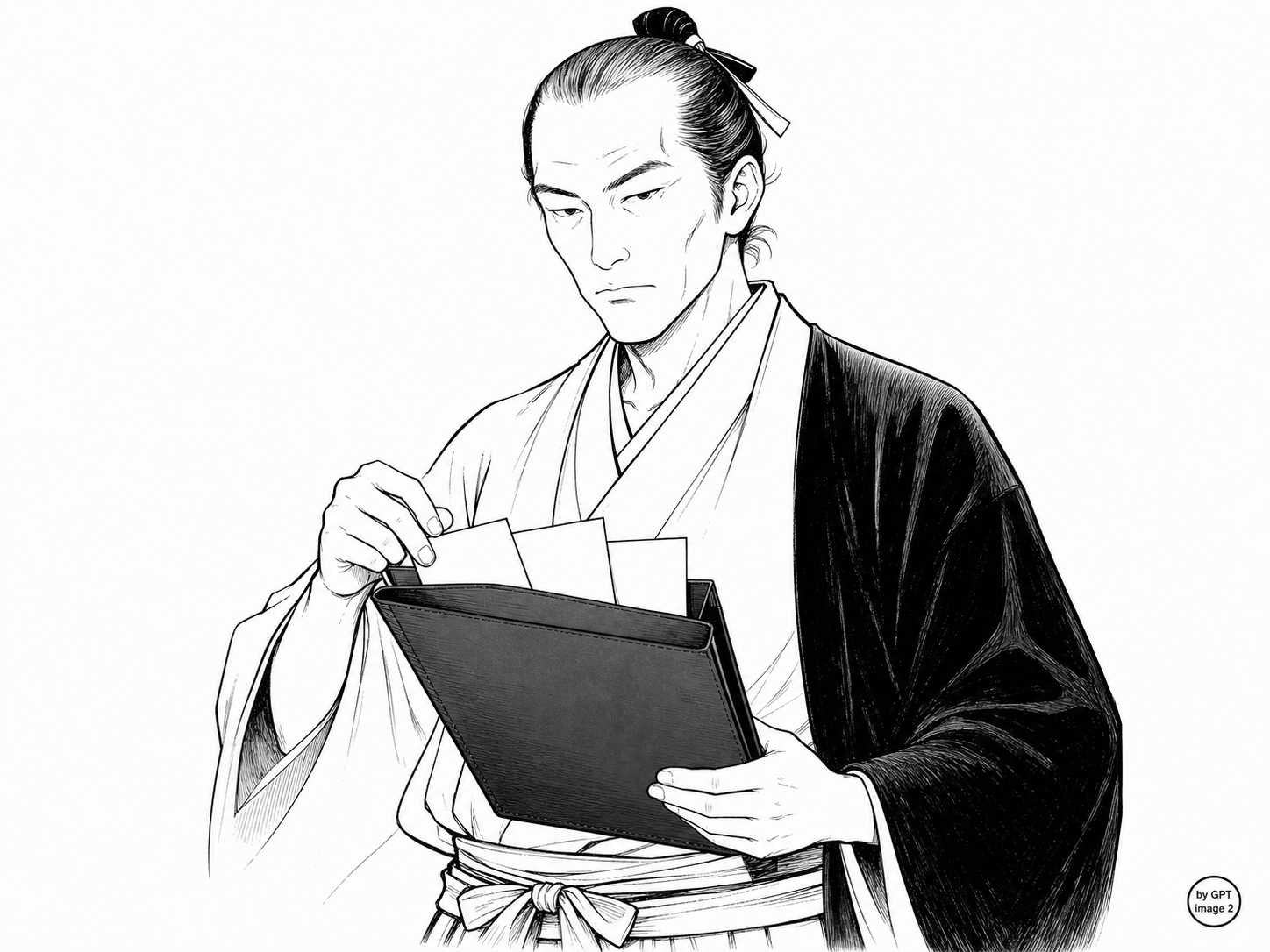
Canon. The informal network through which the shogunate handles yoma incidents.
#Scent — The Nameless Office
This organization has no sign. On one day it is a sealed letter from an inspector; on another it is a temple ledger; on another it is a stranger who arrived as an attendant from Kagura Domain. Because it has no name it can vanish easily, and because it can vanish easily it endures.
#Law — Running the Organization
- Treat the secret Exorcism system as a per-incident ad hoc network, not a single organization.
- PCs may be placed as formal members, outside contractors, persons under surveillance, or fall-guys.
- The shogunate's help is a resource and a restriction simultaneously. Evidence retrieval, reporting bans, and incident reduction always come with it.
#Scene Commentary — Orders Without Orders
The shogunate's secret Exorcism system is easy to work with precisely because it has no name. A formal organization makes responsibility too clear-cut, but a nameless network can appear with a different face in each incident. Yesterday it was a doshin, today it is a temple messenger, tomorrow it is a Kagura Domain dispatch unit.
Using this organization as the PCs' affiliation creates a stable commission structure. But it must not provide only comfort. Shogunate missions must always come with restrictions. Resolve the incident but do not disclose it. Eliminate the yoma but do not sully the domain's name. Spare the witnesses but prevent them from testifying. This contradiction is what gives Edo play its flavor.
Conditions to attach to mission documents:
- Nothing goes into the official record.
- The names of specific families or temples are not to be spoken.
- Yoma artifacts are not to be destroyed; they are to be retrieved.
#Session Application — Giving a Nameless Affiliation
- First scene: PCs receive not a formal commission but a roundabout verbal order and a sealed letter.
- Complication: if they fail, the organization denies their existence; if they succeed, the credit is never recorded.
- Closing question: what will PCs who fight for a nameless organization use to remember their own victories?
#Opening Vignette — The Wet Sealed Letter
Under a rain-leaking bridge, shogunate inspector Sakakibara Gen'emon did not open the sealed letter. Left sealed, it was a command; opened, it became responsibility. Instead he lowered the lantern and confirmed each of the PCs' faces one by one.
"No one died under this bridge tonight."
The Kagura Domain dispatch samurai narrowed his eyes. "There are three bodies, sir."
"Not in the law-enforcement record."
The young monk from the temple clutched his wet prayer beads. "The souls have not yet departed. Their names must be called."
Only then did Gen'emon hold the sealed letter out to the PCs. There was no shogunate seal on the wax. Instead a small stamp — the kind used in temple registries — had been pressed into it.
"Call the names and they become a rumor. Become a rumor and the Hundred-Tale Society arrives. The Hundred-Tale Society arrives and Black-Tag Gang sets a price. Then we are not saving three people; we are facing the entire night of Edo."
From beyond the bridge railing, water droplets rose upward. One dead porter opened his eyes and stared at the PCs without remembering his own name.
"The order is simple," Gen'emon said. "Pacify the souls. Retrieve the objects. And report that no one died tonight."
When those words ended, someone laughed from the dark. Not a human laugh — the sound of erased letters scratching themselves back onto paper.
#Organization Card
| Item | Details |
|---|---|
| Surface | The informal cooperation network of shogunate administration and law enforcement |
| Interior | Confirmation, isolation, exorcism, sealing, and record erasure of yoma incidents |
| Leadership | Secret inspectors, onmyo records officials, temple and shrine advisors, Kagura Domain liaison |
| Field | Doshin, okappiki, hatamoto swordsmen, exorcist monks, Enryokan absorbed faction |
| Strengths | Legal authority, document control, law-enforcement network, sealing resources |
| Weaknesses | Accountability evasion, corruption, reporting delays, Black-Tag Office infiltration |
The shogunate's secret Exorcism system is a mode of operation, not an organization name. In the same incident, the commander may be an inspector, the funding may come from a temple, and the military force may be provided by Kagura Domain. The GM should depict this system not as a single headquarters but as separate departments pushing the same incident forward while pretending not to know each other.
#Command Structure
| Level | Representative | Role | How to Play |
|---|---|---|---|
| Senior inspector | Sakakibara Gen'emon | Final authority for orders and concealment | An ally, but one who always thinks of the record first |
| Onmyo records official | Minamoto no Tokitsune | Spirit Realm gate and forbidden text management | Someone who knows the answer but cannot make it public |
| Temple and shrine advisor | Shoren-in Myokaku | The mandate for funerals, purification, and sealing | Have them worry about human souls before the shogunate does |
| Kagura Domain liaison | Kagura Sanenori | Authorization of force deployment and field command | Give them the tension of wanting to draw a sword but waiting for permission |
| Field rank and file | Doshin, okappiki, junior monks | Witness retrieval, checkpoints, artifact seizure | Play them as ignorant, frightened, or already bribed |
Sakakibara Gen'emon is not a villain. But he learned that the Great Peace is a word larger than any person. He is grateful when PCs save people, but if that rescue shakes the records he reprimands them. This figure is the axis that holds both the light and shadow of the shogunate in one face.
#Faction Trait
[aptitude] Secret Order System (密命體系)
Members of the shogunate's secret Exorcism system can control a scene without formal orders, and rename incidents through documents and seals.
Effect:
WisdomorPresencechecks directly related to evidence retrieval, scene lockdown, grounds for arrest, official record access, and concealment reports gain +1. If a shogunate document or secret-order tile can be presented, increases to +2.When a PC acquires this: 1/session,
WisdomorPresencechecks in scenes requiring official authority gain +3. After use, the fact is recorded in shogunate records and the GM may attach a reporting obligation or concealment condition to the next scene.Application: Minion–Elite units and companion squads belonging to the shogunate's secret Exorcism system carry this as an innate trait. Lord-grade NPCs such as Sakakibara Gen'emon place this in 1 General Trait slot.
#Companion Squads
A PC affiliated with the shogunate may bring the following squads to an incident scene. All squads below apply the Faction Trait [aptitude] Secret Order System. Squads alter scenes more through authority and concealment capability than through combat power.
#Shogunate Checkpoint Unit — Minion
Wounds 1, Defense 12. Domination +2 (5 members).
Techniques:
- Passage Lockdown [stance] — Sustained. Human NPCs leaving the same zone pay +1 Energy to move.
- Registry Check [Kata] — When directed. In an investigation scene, confirm the owner of one witness, object, or travel record.
#Onmyo Sealing Squad — Veteran
Wounds 2, Defense 13. Domination +3 (3 members).
Techniques:
- Temporary Barrier [stance] — Sustained. The first attack roll of spirits and onryo in the same zone takes -1.
- Talisman Lock [Kata] — When directed. 2d10+Wisdom(+2) ≥ 13. On success, delay one gimmick's movement or rampage in the same zone by 1 breath.
#Command NPC: Sakakibara Gen'emon — Lord
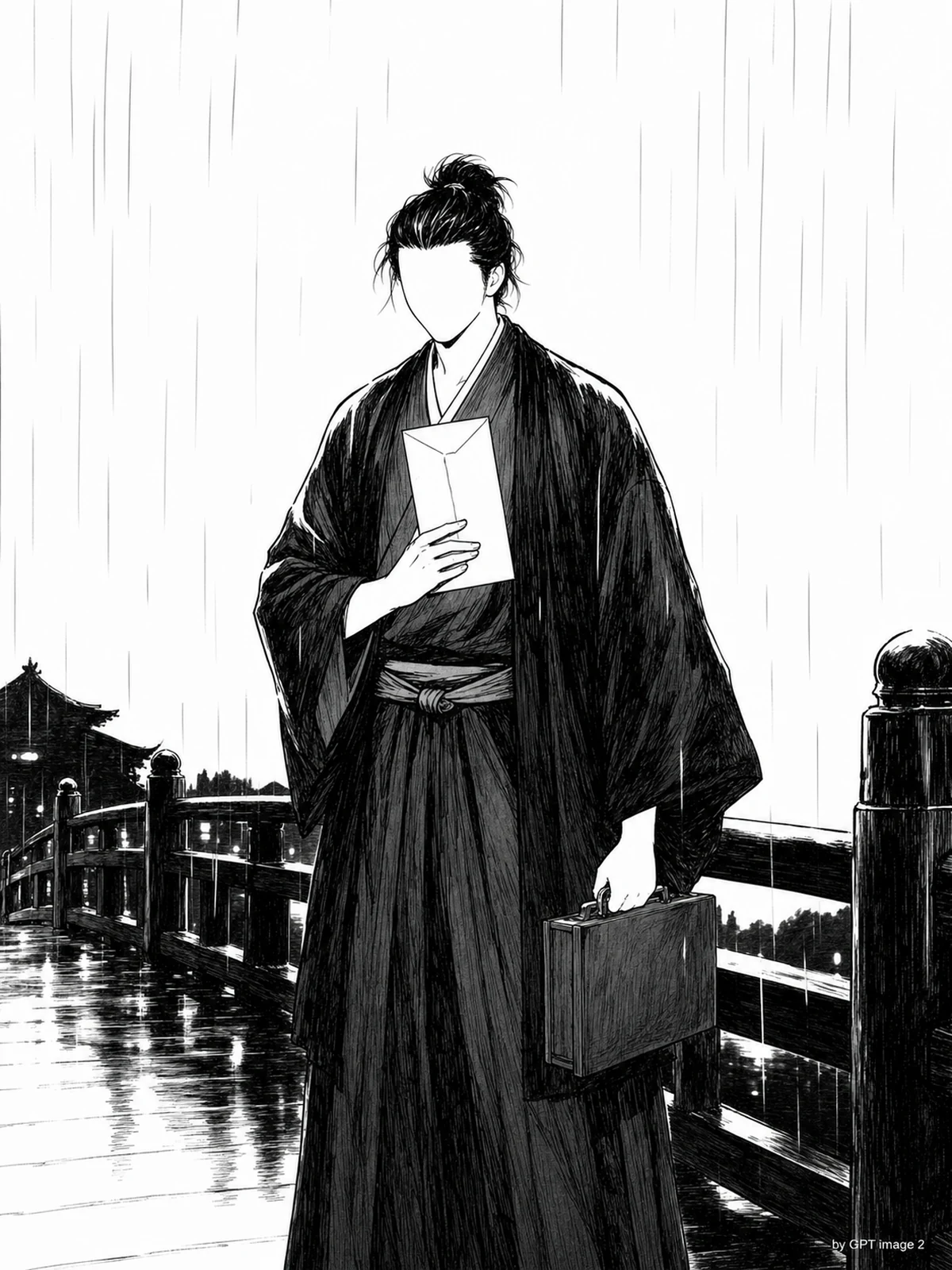
Sakakibara Gen'emon (榊原玄右衛門) — Lord
Wounds 5, Defense 14, Energy 12
Courage+1, Finesse+2, Physique+2, Wisdom+4, Presence+3, Fate+2
Domination +4.5| Technique | Type | Energy | Roll | Effect | Limit |
|---|---|---|---|---|---|
| Issue Secret Orders | [Kata] | 3 | 2d10+Presence vs target 2d10+Courage | Failing human Minion/Veteran squads cannot attack and must wait for 1 breath | 1/round |
| Evidence Retrieval | [Kata] | 2 | 2d10+Wisdom ≥ 13 | Seal one object or document at the scene as a shogunate record. Shogunate holds advantage in subsequent negotiation scenes | 1/session |
| Inspector's Blade | [Attack] | 2 | 2d10+Courage ≥ Defense | 1 Wound | — |
| Document Shield | [Technique] | Reservation 2/Improvised 3 | 2d10+Wisdom ≥ enemy attack | Negate hit. On success, the attacker leaves one unfavorable record in the next social scene | — |
Special:
- Face of the Great Peace: While Gen'emon is present, shogunate-affiliated or allied human squads gain Domination +1. If a PC openly violates a concealment order, this bonus disappears immediately.
- Faction Trait: Gen'emon holds [aptitude] Secret Order System in 1 General Trait slot.
Gen'emon must remain positioned between "good superior" and "inconvenient antagonist." He needs the PCs, and the PCs need his resources. But what he protects to the end is not truth — it is order.
#Light and Shadow
| Light | Shadow |
|---|---|
| Prevents panic and keeps incidents contained | Can erase even victims' names and grievances |
| Connects the resources of temples, shrines, and domains | Diffuse accountability makes corruption easy to hide |
| Gives PCs lawful freedom of movement and investigation | Can discard PCs when they fail |
| Controlling yoma artifacts reduces the black market | Controlled artifacts can leak from within |
#Using as a PC Faction
Using the shogunate as the PCs' faction gives the campaign a stable mission structure. Present mission orders, a reporting target, items to retrieve, and a concealment condition in every scenario. In return, give PCs moral choices. Following orders preserves order but leaves the victim's grudge; resolving the grudge makes the report a lie.
#Using as a Primary Antagonist
Even when the shogunate is the antagonist, do not play it as an evil empire. The shogunate arrests PCs to cover incidents, hides witnesses, and retrieves yoma artifacts. The motivation is the Great Peace, but the methods harm people. When PCs are fighting the shogunate, build the scene around recovering records and protecting witnesses before building the scene around cutting down inspectors.
#The Nameless Organization
The shogunate's secret Exorcism system holds no single official name. The moment an official name exists, that existence is recorded. In the field it appears simply as "an order from above," "a directive from the inner archive," or "a request passed through a temple."
This organization operates by binding the following forces together.
| Force | Role |
|---|---|
| Shogunate inspectors | Investigate concealed incidents in domains |
| Doshin and okappiki | Urban field work and lower-level intelligence |
| Temples and shrines | Funerals, purification, sealing, sacred precinct management |
| Onmyo records official | Management of old Spirit Realm gates and forbidden documents |
| Kagura Domain dispatch unit | Military response beyond the capacity of ordinary law enforcement |
| Fuma remnants | Infiltration, pursuit, witness retrieval |
| Enryokan absorbed faction | Yoma ecology, negotiation records, interpretation of forbidden knowledge |
#Positions for Enryokan Alumni
Within the shogunate's secret Exorcism system are those who came from the Enryokan. They are not listed in official rosters as "Enryokan." They are placed under other names: assistant onmyo records official, temple sealing advisor, inspector consultant, forbidden text classifier. The shogunate uses their knowledge while distrusting their beliefs.
They can become important allies for PCs. They know yoma weaknesses, old negotiation precedents, and the names the Hundred-Tale Society hides. At the same time they are persons under surveillance. After Ashikaga Yoshihiko disappeared on suspicion of colluding with Tamamo-no-Mae, the same question clings to every Enryokan alumnus: "Did you also deal with yoma?"
When using an Enryokan descendant within the shogunate, maintain the following tensions:
- Their ability is certain. Without them, the shogunate cannot read many of the gates.
- Their trust is limited. Important materials are always retrieved or censored by superiors.
- Guilt remains. Many fellow students were branded dangerous elements; some flowed to Hidden Hannya.
- They find it hard to hate the Hundred-Tale Society. Some of the Hundred-Tale Society's materials were originally names the Enryokan tried to protect.
#Relations with PCs
PCs may not be formal members of this system. That is actually preferable. The official organization moves slowly and is bound by documents and prestige. PCs move in the gaps as informal fixers, dispatch warriors, temple proxies, dojo lodgers, or merchant company escorts.
| PC affiliation | Mission |
|---|---|
| Shogunate inspector support | Compare domain reports with actual field conditions |
| Kagura Domain dispatch unit | Yoma combat and securing sealing sites |
| Temple and shrine proxy | Grudge resolution, funerals, sacred precinct purification |
| Ronin or dojo lodger | Armed resolution that is difficult to leave in the official record |
| Merchant or entertainer informant | Tracking rumors and logistics |
#Limitations
The shogunate is strong. But it is slow against documents that do not know the field, domain prestige, corrupt officials, conspiratorial infiltration, and the Hundred-Tale Society's rumors. These limitations create the necessity for PCs.
"An office with no sign can order anyone to do anything, because no one takes responsibility for it."