#About This Book — Sengoku Fudoki
Contents
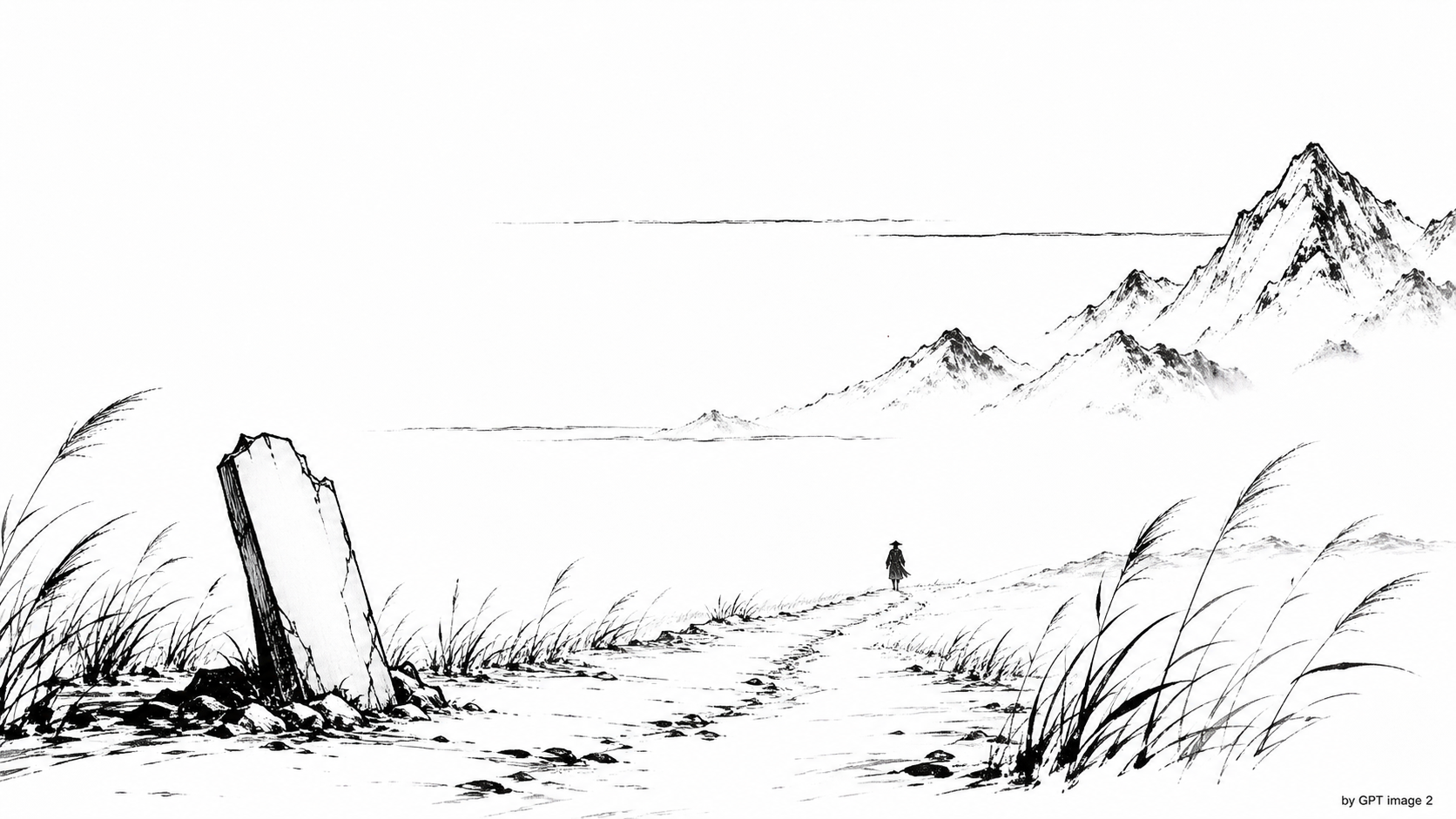
A book sits beside the table. Not as a reference chart — someone placed it there to read.
#Why This Book Was Written
At the table of Konsei Reiyotan (混世霊妖譚), dice roll and rounds pass. The samurai takes a stance, the onmyoji throws a talisman, Energy runs dry, Wounds are whittled down. That is the breath of this game.
But between one breath and the next there is a moment to settle the breath. The short silence between the end of one round and the start of the next. The week between one session and the next. The evening on the walk home after the table folds up.
This book was written for those in-between moments.
#This Book Is a Book to Be Read
There is not a single number in this volume to help you with a check. Energy, Wounds, Defense, Target Number, technique — none of them appear here. There is no Law(法).
What it has instead is Scent(香) — scenes, smells, seasons, voices, evening light that has gone on too long. So that someone who never lived the Sengoku era can grasp even a single fragment of that era at their fingertips.
"Scent answers 'why do I want to play this game,' and Law answers 'how do I play this game.'" —
copremise 8
This volume focuses only on the former.
#Three Things This Book Covers
#First — What Is the Sengoku Age?
The name of this era, the period that name points to, the air of the people who lived in it.
#Second — What People Lived in It?
From samurai to ashigaru, farmers, merchants, craftsmen, monks, miko, courtesans, wanderers, and Kirishitan. Their days, their clothes, their food, their fears, their joys.
#Third — What Are Yoma?
The one point where this world differs from the real Sengoku era. The Spirit Realm has opened, and yoma walk. Who are they, why do they exist, and how do people see them?
#What This Book Does Not Cover
- Rules — See the main rulebook
co. - Data cards — Those are in the main rulebook and in
ex. Not here. - Scenarios — There is much description, but the design of actual adventures is the GM's work.
- Character creation guide — That is the domain of the tutorial.
#How to Read It
- Do not read it all at once. One chapter at a time, slowly.
- Do not take notes. All you need is the impression.
- Come back and read it again. You will see different things the second time.
- Do not bring it to the table. At the table, rules are tools. This book is not a tool.
#A Word from the Author
This book is not for your PC — it is for your world. Not for what your samurai will do today, but for what smell the world that samurai lives in carries.
Open it, read it, close it, forget it — that is all fine. If at some session a thought floats up: "Ah, that evening light from the book back then — it looks like this scene" — then at that moment, this book has done its work.