#Edo as a Stage
Contents
Summary. Entry to the ex3 Chapter 01 folder.
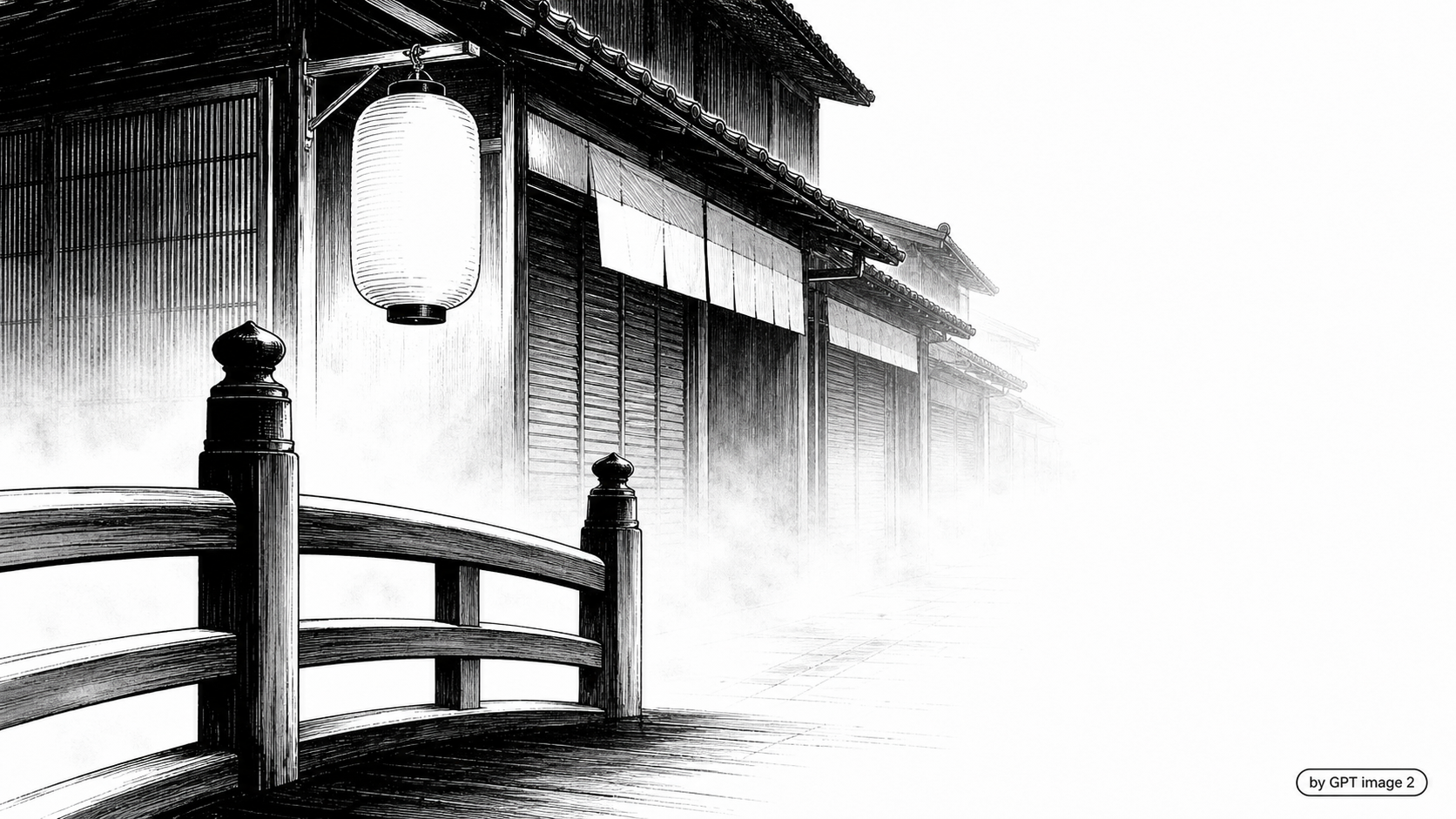
#Opening Vignette — The Checkpoint on the Bridge
The procession halted on Nihonbashi. The box bearing a daimyo clan's crest would not be opened, and the escort's hand would not leave the hilt. The doshin at the checkpoint pretended to read the travel pass, but his eyes were on the water pooled beneath the box. Water cannot rise to the bridge deck, yet the bottom of the box smelled of the river.
"I will need to inspect that."
The escort stepped forward. "This belongs to the domain. It is written there — medicinal herbs destined for Edo Castle."
"Medicinal herbs do not breathe."
At those words the noise from the teahouse behind them went briefly quiet. The children of the nagaya pressed their faces between the railings, and the ronin across the road set down his chopsticks as though nothing were happening. In Edo, everyone watches. Only the first person to say they saw something gets caught up in the incident.
A low singing voice seeped out of the box. The words were unrecognizable, yet the river water beneath the bridge swayed as if keeping time.
"Master doshin." The teahouse mistress whispered. "Must I close up shop today?"
The doshin drew a slow breath. "No. The bridge must be crossed, and trade must go on."
He raised his inspection rod. The escort's face went rigid, and the ronin's right hand slid inside his sleeve. This chapter opens exactly that kind of stage. Cities and roads, checkpoints and processions, those who look and those who pretend not to. In Edo, place determines the shape of the incident.
#Scent — The Surface of Peace
Edo is quiet — and precisely because of that, more dangerous. The streets are tidy, the checkpoints polite, the ledgers neat, yet beneath that order yoma incidents flow on under changed names.
#Law — Using the Stage
- When designing a scene, fix the location, social status, and law-enforcement authority first.
- Before combat, establish the aftershocks of witnesses and records.
- Use highways and cities as recurring stages to build the rhythm of a long campaign.
#Reading Order for First-Time Readers
Readers unfamiliar with Japanese history tend to picture Edo as simply "old Japan with a lot of samurai." This chapter sharpens that impression. Start with Edo Period Overview to understand why the wars ended and what kept the peace. Then read Daily Life, Culture, and Economy to learn where people lived, how they heard rumors, and what they feared. Finally, Status, Law, and Public Order explains why PCs cannot simply draw their swords at will.
Chapter 01 is not mere background. The Spirit Gates, shogunate concealment, the Hundred-Tale Society, human conspiratorial factions, and dojo sword drama that follow all move on top of this social structure.
#Detailed Documents
- Edo Period Overview — The Great Peace and its hidden violence.
- Three Cities and the Five Highways — Edo, Kyoto, Osaka, Nagasaki, and the roads.
- Status, Law, and Public Order — Using social order as incident pressure.
- Daily Life, Culture, and Economy — Nagaya, bathhouses, theaters, publishing, the rice economy, and the circulation of Kaidan.
"On the stage of Edo, a single road and a single status stop the sword before the battlefield does."