#The Night Nothing Happened
zn02 closing story · seriousness ★★ · pure Scent (fiction). No rules or numbers appear.
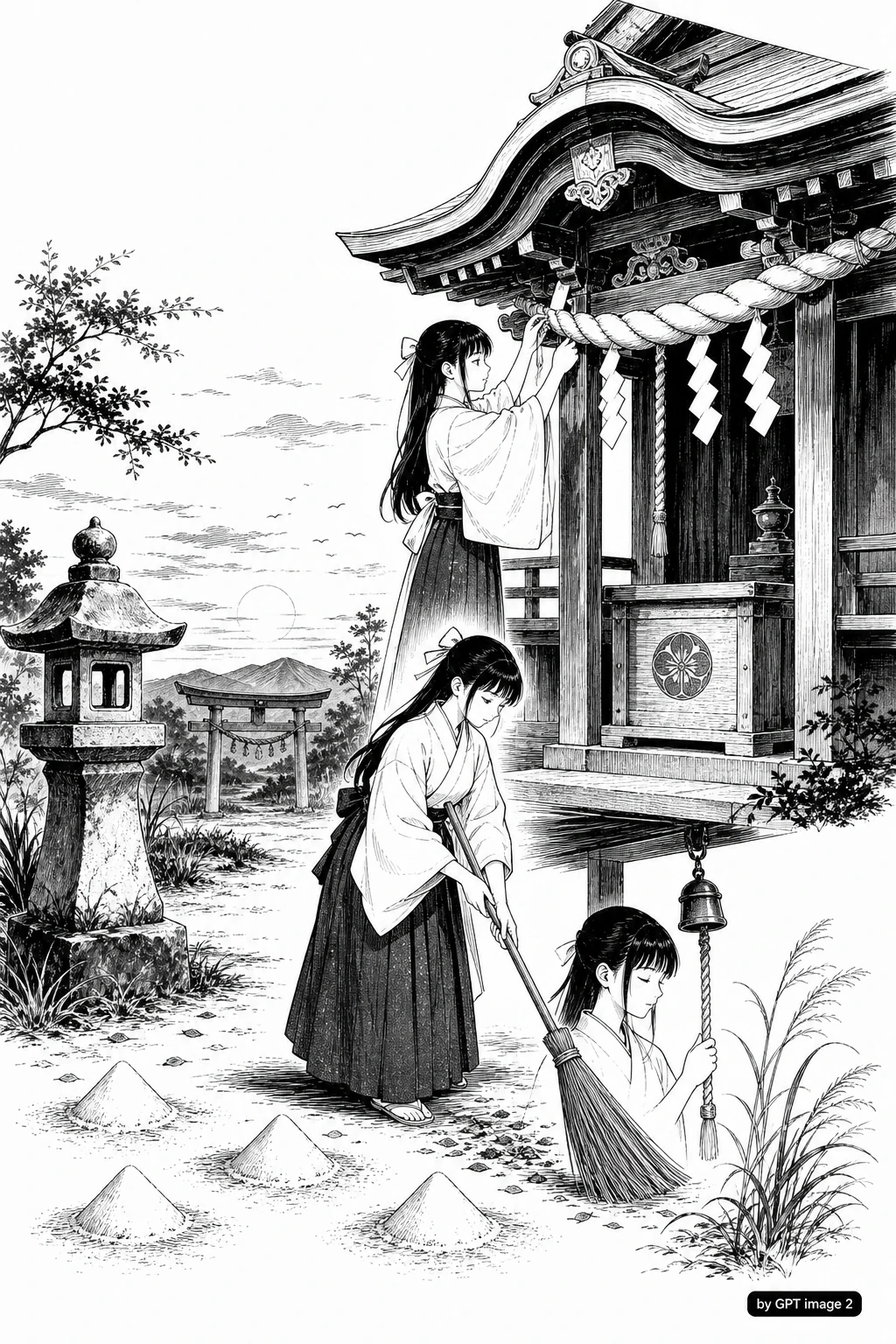
When the sun catches on the tips of the cedars, the shrine hall always darkens by one tone.
I like that. During the day the shrine is just an old wooden house, but at dusk it finally shows its true face. The shadows lengthen, the birdsong cuts off, and the air cools by a layer. Then I take up my broom and go out into the yard.
"Cleaning again, Suzu?"
Gen, who was splitting firewood, laughed. Everyone in the village calls it that. Cleaning. It is not wrong. I sweep the fallen leaves, wipe the stone steps, and retie the loosened knots of the shimenawa—the sacred rope. Then I scatter a handful of salt at each of the shrine hall's four corners.
But Grandmother used to say this is not cleaning. To circle this perimeter once every evening is to retie the cords that are coming undone. Cords no human eye can see.
As I retie the knots, I sing softly. A sound with no melody, just like breath. When I shake the bell once, a clear tone spreads in a ring through the gloaming. That is the signal. Tonight too the gate is closed. That is what I report to the kami.
Gen does not know. No one in the village knows. And that is fine. A night safe in not knowing is all I wish for.
That person appeared at the edge of the village as it was growing dark.
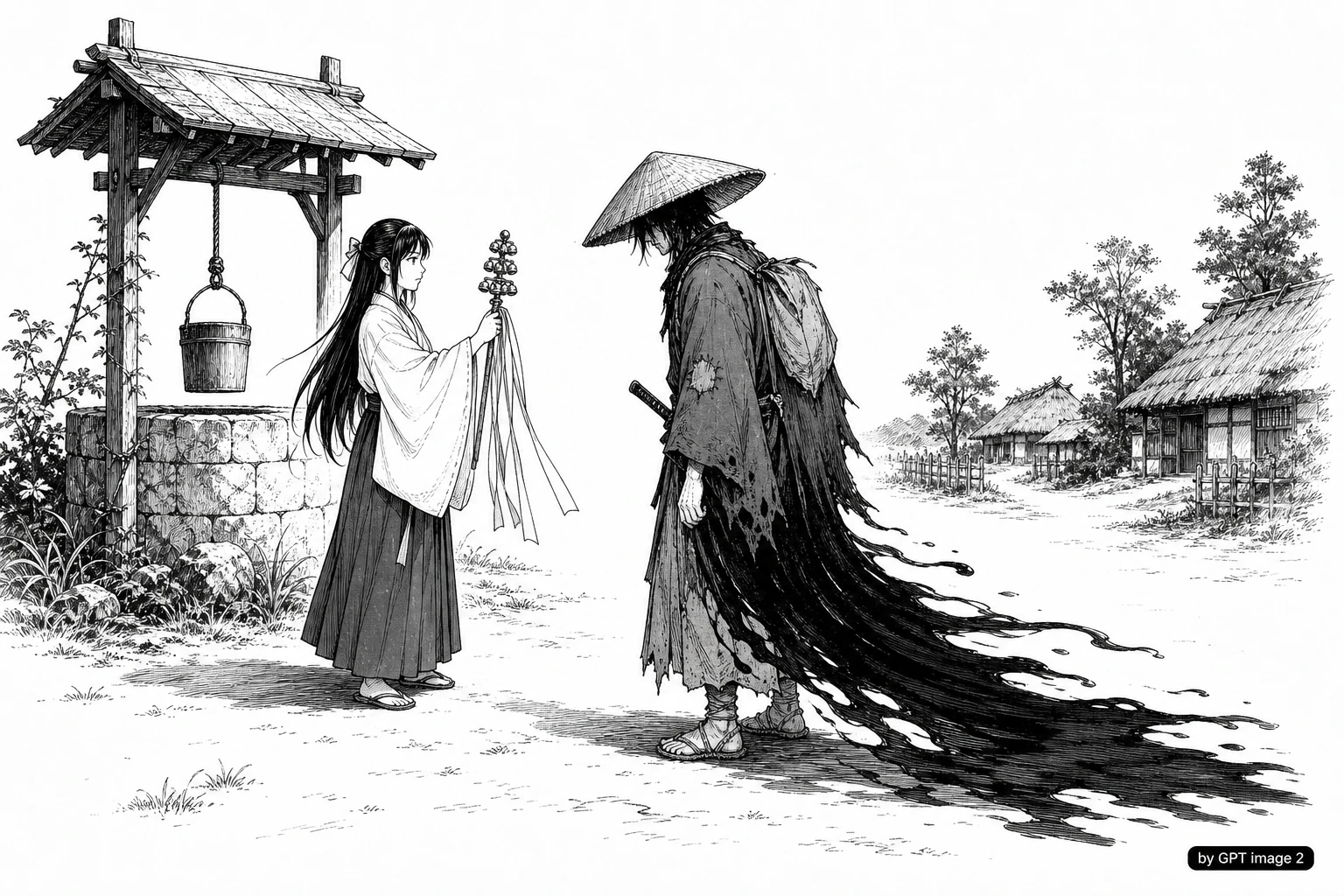
He was a traveler with a sedge hat pulled low. A weary gait, straw sandals caked with dirt. He looked like a common wanderer. People offered greetings, and someone drew water for him.
But I—I, who was balancing a water jar on my head far off by the well—froze on the spot.
That person's shadow was long. Too long. It was not even the direction of the setting sun, yet from beneath his feet something was flowing into the village like thinned ink. Only I could see it. Of course only I could see it.
This is a person who has seen death. A chill ran down my spine. And he came without washing it off.
Grandmother's voice came back to my ear. Defilement does not come with a loud voice, Suzu. It is no one's fault. Whether he passed through a battlefield, or buried someone on the road—the more sorrow a person has been through, the more he carries it without knowing. You must not hate him. Just do not let him in.
I set the water jar down and ran. Not toward the shrine hall, but onto the road leading into the village.
The smell of supper rose up from every alley. Children played their last game of tag, and the old folk sat on their porch benches. A peaceful evening that knew nothing.
I reached the well before that person did. My breath was caught in my throat.
"Sir." As calm as I could manage. "You've come a long way, haven't you. So that you can wash your feet before going on, we've warmed water at the shrine."
From under the hat, weary eyes looked at me. Eyes neither old nor young, just ones that had walked a great deal.
"…I have no business at the shrine, child."
"The shrine has business with you, sir." I made myself smile. Without trembling. "In this village, you see, it is custom to wash your feet before entering. It is nothing. Truly."
It was not a lie. Our village has no such custom, but tonight alone it does. I made it just now.
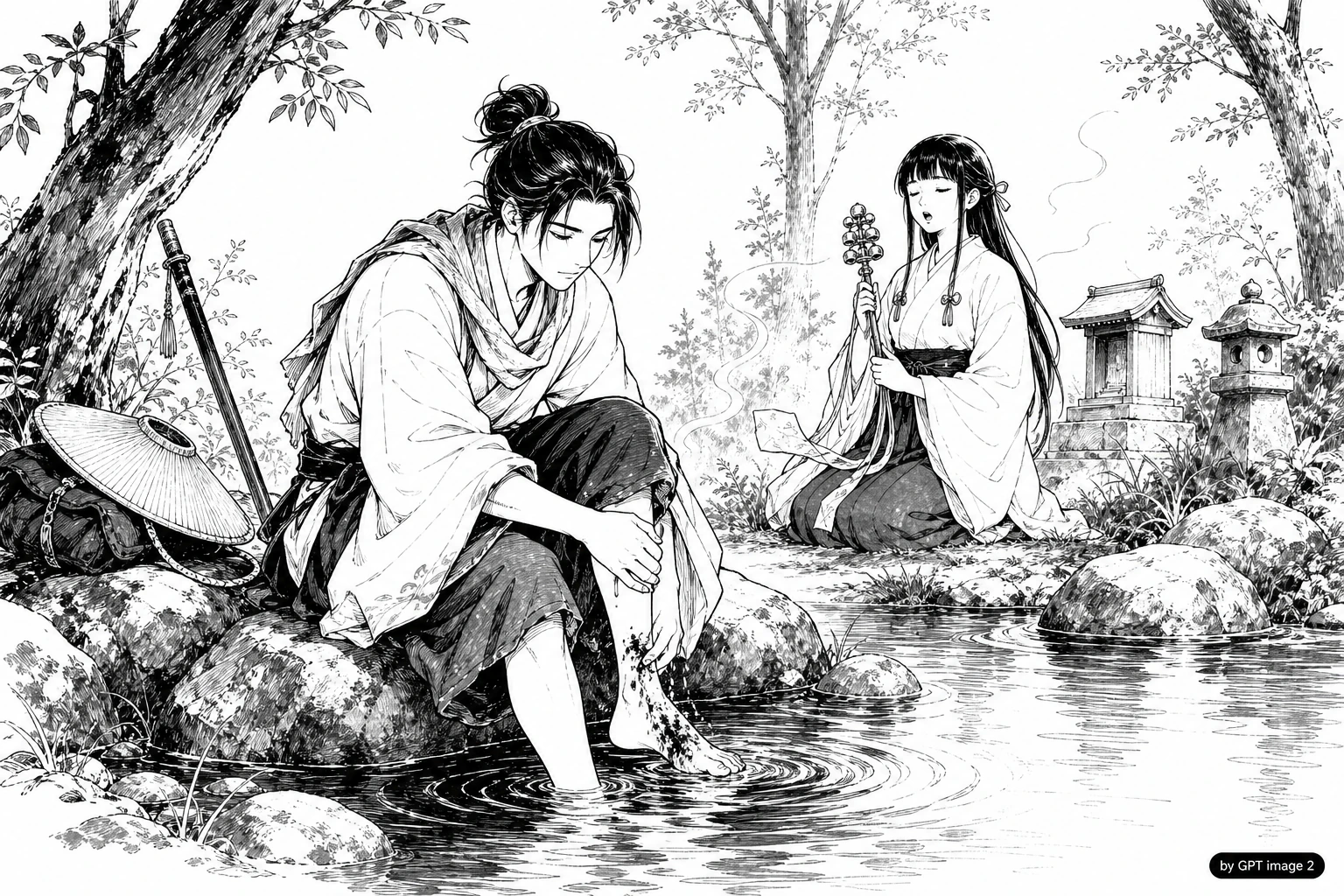
I turned him aside—not toward the village interior, but to the side, to a small waterside in the cedar forest. There, warmed water, a dry cloth, and a jar of salt had been set out beforehand. Things I fill every evening at dusk. For a guest like today's, since Grandmother's time.
He slowly removed his hat. While he washed his feet, I sang quietly behind his back. A sound with no melody, like breath. I did not shake the bell. If I shook it he would notice. Only within my mouth.
The thinned ink that had been flowing beneath his feet slowly came undone and dispersed in the warmed water. The path grew shorter. The shadow became simply a person's shadow.
"…How strange," he murmured. Without realizing it himself. "My shoulders are light. What had long been heavy."
"Because you washed well." I handed him the dry cloth. "You may come in now. There is a house with supper laid out."
He slept in the village that night and left the next morning. He laughed, saying he had slept well, that for the first time in a long while he had not dreamed. Nothing happened.
Gen scolded me, saying I had eaten supper late because of cleaning again. The village people will remember only that last night's guest was a good person. The shrine hall's sacred rope is sound again today, and nothing walked out of the forest.
I take up the broom again. I grip a handful of salt. I shake the bell once. A clear tone spreads in a ring through the gloaming.
Grandmother used to say the work we do is not cutting something down. If the time to cut should come, that already means we were a step too late.
So tonight too, nothing happened.
That—is how I won.
(End)