#Inscriptions and Marks
Contents
#Scent — Inscriptions and Marks
Fiction-Only — These marks are not explanations. They are what remained after someone decided speech was too easy to overhear.
The mark was shallow enough that a careless eye would call it a scratch. A careful eye would see that the scratch had been renewed every year. A more careful eye would ask why the newest cut was on the inside of the gate.
#Table — Marks
| # | Mark | Loose Edge |
|---|---|---|
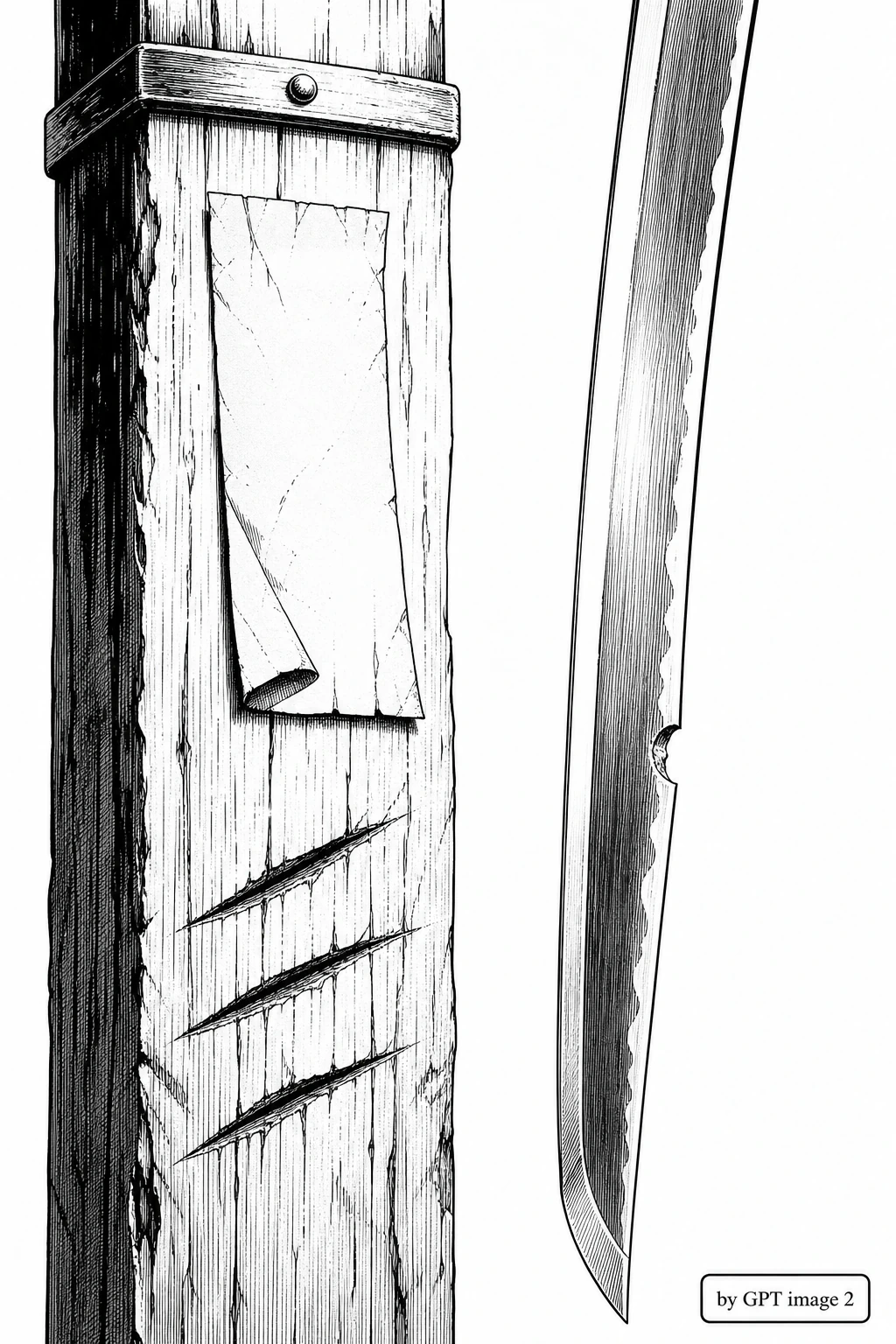
| 1 | Three short cuts under a ferry post, always below the waterline. | Who makes the cuts when the river is high? |
| 2 | A blank talisman pasted upside down inside a magistrate's desk drawer. | Was it meant to seal the desk, the papers, or the magistrate? |
| 3 | A sword nick shaped like a crescent, repeated on five unrelated blades. | Did one weapon mark them all, or one oath? |
| 4 | A shrine rope tied with a fisherman's knot instead of the proper twist. | Which sea custom entered an inland shrine? |
| 5 | The same childhood nickname scratched behind every mirror in an inn. | Who is being called by the mirrors? |
| 6 | A clay roof tile pressed with a handprint too small for an adult and too deep for a child. | What climbed over the roof before the fire? |
| 7 | A line of soot across the lintel of houses where no hearth smoke reaches. | Is it a warning, a claim, or the height of something passing through? |
| 8 | A temple bell whose inside is marked with fingernail scratches. | Who was inside the bell, and why did no one hear? |
| 9 | A lacquer box with a seal impression that does not match any known clan but is accepted by every clerk. | Who trained the bureaucracy to obey it? |
| 10 | Five prayer beads carved flat on one side, as if worn against teeth. | Who kept them in the mouth? |
| 11 | A road marker corrected from "north" to "home" in three different hands. | Which travelers all needed home to mean north? |
| 12 | A child's height mark on a pillar that continues above the ceiling. | Did the child grow, float, or keep being measured after death? |
| 13 | A rust stain on a gate hinge that returns after every cleaning in the shape of an eye. | What is looking through the hinge? |
| 14 | A folded fan with blank ribs, except one rib carved with a burial date from next month. | Whose death has already been scheduled? |
| 15 | A bridge plank marked on the underside with one character: "borrowed." | Who borrowed the bridge, and what was lent in return? |
| 16 | A set of hoofprints burned into stone, stopping before the stable door. | What entered without leaving prints inside? |
| 17 | A storehouse lock scratched from the inside with tally marks, though the room is always empty. | What is counting days in an empty room? |
| 18 | A monk's bowl marked with the same seal as a confiscated matchlock. | How did a weapon seal become a begging bowl mark? |
| 19 | A gate plaque where the family name has been planed off, but the dust will not scatter. | What refuses to let the name leave? |
| 20 | A rice field boundary stone with two shadows at noon. | Which boundary is the second shadow marking? |
| 21 | An inkstone with grooves worn by writing the same missing character. | What word could not be completed? |
| 22 | A roof beam carved with tiny boats, each boat carrying one dot. | Are the dots passengers, souls, debts, or storms? |
| 23 | A paper screen patched from old warrants, all with the accused names cut out. | Who lives behind accusations without names? |
| 24 | A burial tablet polished smooth except for the honorific. | Who erased the name but kept the rank? |
#Table — Reading a Mark
| Question | Why It Matters |
|---|---|
| Who can see it? | A mark hidden from strangers may be meant for the household, not intruders. |
| Who must not see it? | Concealment often points to the actual owner of the mark. |
| Is it renewed? | A renewed mark implies living labor, seasonal duty, or an ongoing bargain. |
| Is it correct? | A wrong ritual mark may be incompetence, mockery, translation, or sabotage. |
| Does it copy another mark? | Copies can imply cult, clan, counterfeit authority, or contagious symbolism. |
#Note — Using Marks
Marks work well when the party is already at the location. They reward slow looking. A mark should rarely explain itself at first sight; it should point to a habit, a repeated visit, or a rule that locals obey without naming.
When a mark appears on an object, decide whether the object has been marked by its owner, by its victim, by a clerk, by a spirit, or by someone who wanted future investigators to misunderstand all four.