#Nurarihyon and the Hundred-Tale Society
Contents
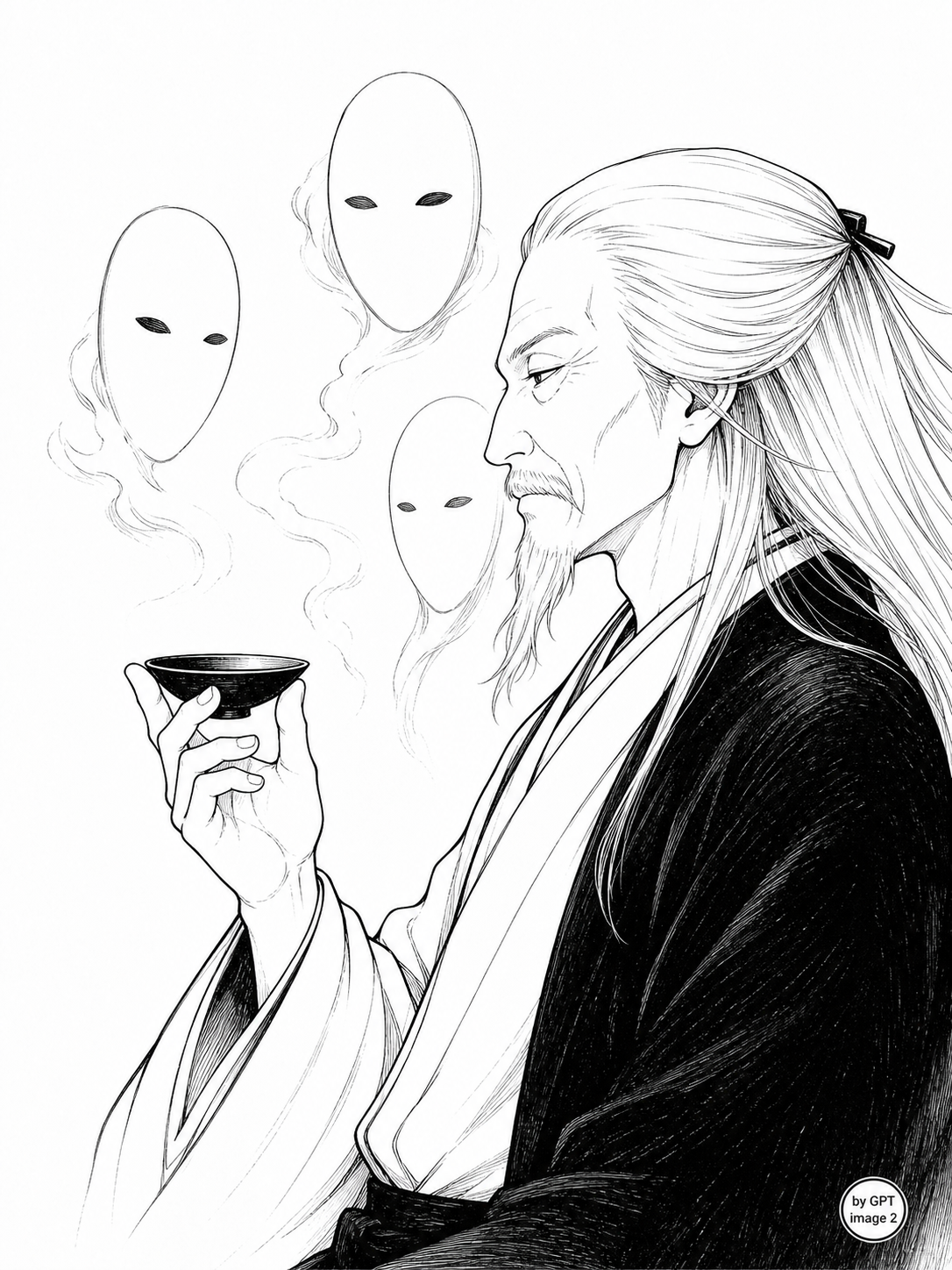
Canon. Defines the center of the Edo-period yoma faction.
#Scent — The Master of Someone Else's House
Nurarihyon does not break doors. He is somehow already sitting inside the room drinking tea, making everyone mistake him for the owner. Instead of conquering mountains, Edo's yoma carve out their own places inside houses, alleyways, and Kaidan.
#Law — Running the Hundred-Tale Society
- The Hundred-Tale Society is the shogunate's adversary but not the target of extermination in every incident. They can be played as deal-makers, bystanders, or inconvenient protectors.
- Nurarihyon's goal is not a mass opening of Spirit Realm gates but securing survival rights for city yoma.
- When the Hundred-Tale Society intervenes, treat fear, rumors, names, and eyewitness accounts as scene resources.
#Scene Commentary — An Adversary That Cannot Simply Be Eliminated
Using Nurarihyon and the Hundred-Tale Society only as final adversaries to be defeated each time quickly becomes monotonous. They are the faction that creates survival rights for city yoma. They are dangerous, but when human conspiracies are turning yoma into experimental subjects and commodities, the Hundred-Tale Society can stand on the side that keeps balance.
Hundred-Tale Society scenes are best begun with strange courtesy. The envoy greets first, the yoma proposes deal terms, and Nurarihyon sits in the inner seat of someone else's home as if he owns it. It is clear that PCs cannot trust them, but the GM should also show what happens to the Kaidan ecology of the city if they all disappear.
How to use the Hundred-Tale Society three-dimensionally:
- They hide dangerous yoma but also block more dangerous humans.
- They feed on fear but dislike fear being fully commodified.
- They give PCs information but ask in exchange that one name be protected.
#Session Application — Building a Negotiable Yoma
- First scene: the Hundred-Tale Society envoy does not attack the PCs but calls their names as if already knowing them.
- Complication: the yoma they are protecting is dangerous, but if the human conspiracies capture it, a greater catastrophe results.
- Closing question: how far can the PCs accept the concept of yoma survival rights?
#Opening Vignette — The Hundredth Tale
The oil lamp went out at the ninety-ninth tale. Everyone gathered at the Kaidan meeting held their breath. The tradition said that when the last lamp was extinguished, a yoma would appear. Yet a stranger was already sitting in the middle of the room.
"It would be best not to tell the hundredth tale," the old man said.
The publisher hid his manuscript with trembling hands. "Who are you, sir?"
"The owner of this house."
"This house is my house."
"Is it? Then why are you tonight selling a dead child's name in your own home without permission?"
When the PCs entered the room, a faceless child was reflected in the folding screen behind the publisher. The child was not crying. Instead they stared at the manuscript where their name was written. Two men from Black-Tag Gang were waiting outside the door, and the shogunate's censorship official had not yet arrived.
Nurarihyon slid a teacup toward the PCs.
"If you burn that manuscript, the child will be forgotten. If the writer sells it, the child becomes merchandise. If I take it, the child becomes a Kaidan." He smiled. "Which of the three is worst?"
Then one lamp flickered back on. Not the ninety-ninth — but the hundredth lamp, the one where no name had been written.
#Organization Card
| Item | Details |
|---|---|
| Surface | A backroom gathering that mediates urban Kaidan and yoma rumors |
| Interior | A survival-rights organization that preserves the names and whereabouts of vanishing yoma |
| Leadership | Nurarihyon, Kaidan compiler, bathhouse/pleasure quarter/theater intermediaries |
| Field | Noppera-bo envoys, tsukumogami errand runners, eyewitness account collectors |
| Strengths | Rumors, hideouts, name preservation, contact with the human underworld |
| Weaknesses | Dependence on fear, tendency to shelter even dangerous yoma, shogunate censorship |
The Hundred-Tale Society is not a yoma kingdom. It is a loose gathering of mutual aid, intimidation, mediation, and retaliation — the underworld that yoma built to keep from disappearing in Edo. That is why Hundred-Tale Society scenes begin with courtesy, tea, names, and conditions before combat.
#Command Structure
| Level | Representative | Role | How to Play |
|---|---|---|---|
| Leader | Nurarihyon | The gathering's seat of honor and final arbitration | Do not make him an enemy too quickly; always have him propose conditions |
| Kaidan compiler | Ohana | Coordination of rumors and publications | Use as a human who understands the Hundred-Tale Society — a conduit for the PCs |
| Alley envoy | Faceless Gohei | PC contact, warnings, deals | Have him call their names before attacking |
| Hideout managers | Bathhouse proprietors, pleasure-quarter women, theater stagehands | Providing shelter for yoma | Give the sensation of yoma mixed into ordinary daily life |
| Dangerous lodgers | Jorogumo, onryo, city oni | Yoma who are sheltered but difficult to control | Use as the cause of incidents that undermine the Hundred-Tale Society's justification |
Ohana is the Hundred-Tale Society's human face. She may not love yoma. She simply believes that leaving them as Kaidan is less cruel than having the shogunate erase their names or Black-Tag Gang set a price on them. When PCs are talking to the Hundred-Tale Society through her, Ohana speaks not as "an ally of yoma" but as "an ally of forgotten names."
#Faction Trait
[aptitude] Path of Kaidan (怪談の道)
Hundred-Tale Society members move not through official roads but through rumors, eyewitness accounts, and the back doors of other people's homes. The better-known a location, the more easily they vanish and reappear there.
Effect: Infiltration, negotiation, and escape checks in urban locations associated with Kaidan or eyewitness accounts — such as bathhouses, pleasure quarters, theaters, tenements, abandoned buildings, and warehouses — gain +1. If the Hundred-Tale Society has already seized control of the rumors at that location, increases to +2.
When a PC acquires this: 1/session, investigation rolls for urban rumors and eyewitness accounts or negotiation rolls with the Hundred-Tale Society gain +3. After use, shogunate official records and Kagura Domain reports treat the PC with suspicion.
Application: Minion through Elite units and companion squads belonging to the Hundred-Tale Society carry this as an innate trait. Lord-grade yoma such as Nurarihyon place this in 1 General Trait slot.
#Companion Squads
All squads below apply the Faction Trait [aptitude] Path of Kaidan.
#Faceless Envoy Unit — Minion
Scent: Noppera-bo who stand at the mouth of an alley with smooth, featureless faces and call out a person's name before drawing a blade. They come not to fight but to deliver a message, so rather than being cut down they scatter.
Wounds 1, Defense 12. Domination +2 (4 members).
Techniques:
- Call the Name [Kata] — When directed. 2d10+Presence(+1) vs target 2d10+Wisdom. Failing targets cannot attack the Envoy Unit first for 1 breath.
- Alley Scatter [Technique] — Reservation 1/Improvised 2. On being hit, the squad loses 1 cohesion and moves to an adjacent zone.
#Kaidan Collectors — Veteran
Scent: Those who wander bathhouses, pleasure quarters, and abandoned houses, gathering by ear the tales people fear. Their work is to collect eyewitness accounts and also to blur them, so wherever an incident ends they always leave behind one other rumor they have reworked.
Wounds 2, Defense 13. Domination +3 (3 members).
Techniques:
- Weave Rumors [stance] — Sustained. Negotiation and intimidation rolls for Hundred-Tale Society units on the same battlefield gain +1.
- Replace Testimony [Kata] — When directed. After combat, blur one witness statement into a Kaidan form.
#Command NPC: Ohana, Hundred-Tale Society Compiler — Elite
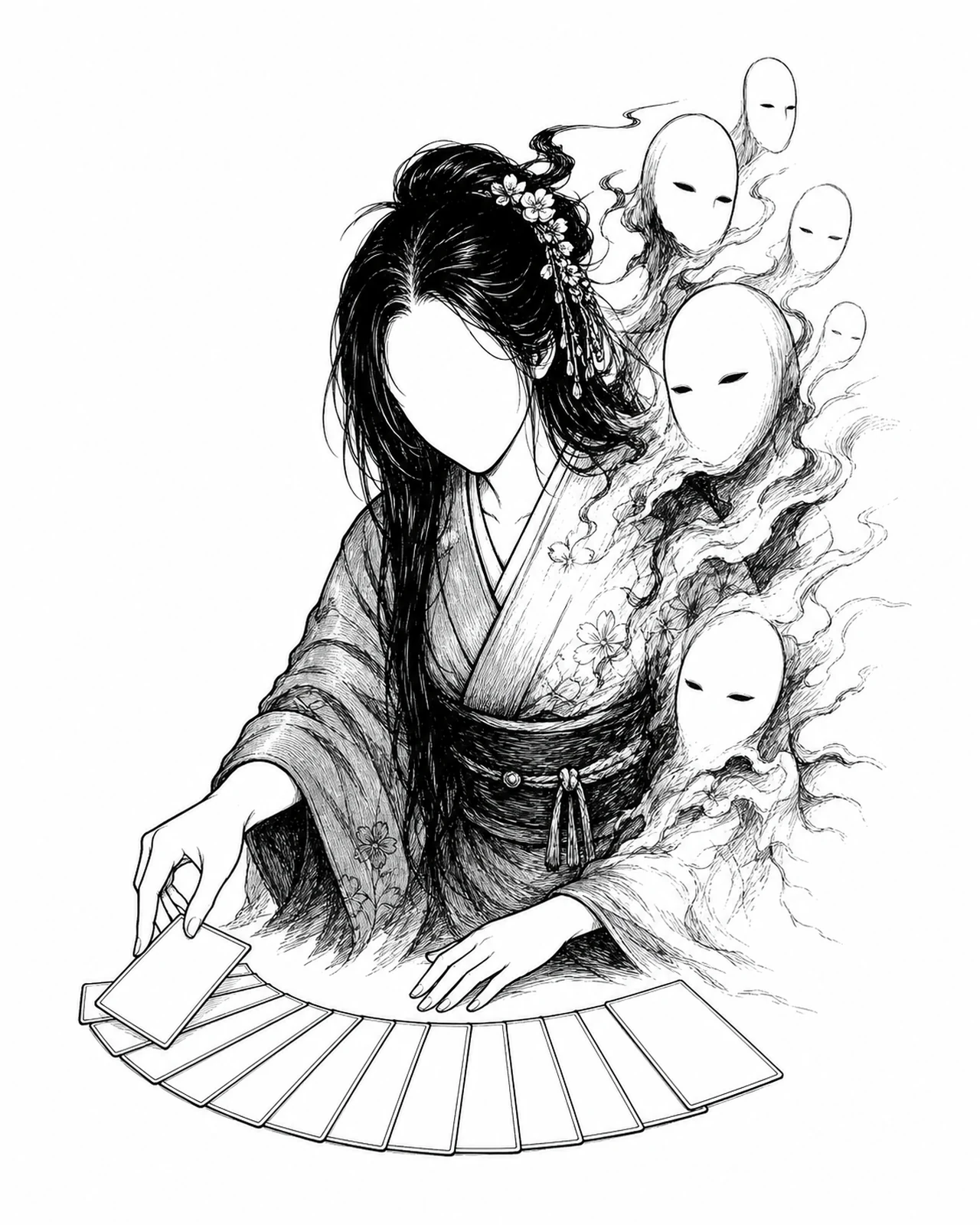
Scent: A human compiler who sits between publications and rumors and reworks forgotten names so they survive as Kaidan. Claiming to be neither on the yoma's side nor the shogunate's, she directs the envoys and collectors with a single folding of her fan.
Ohana (お花) — Elite
Wounds 3, Defense 13, Energy 11
Courage+0, Finesse+2, Physique+1, Wisdom+3, Presence+4, Fate+2
Domination +4| Technique | Type | Energy | Roll | Effect | Limit |
|---|---|---|---|---|---|
| Divert to Kaidan | [Kata] | 3 | 2d10+Presence vs target 2d10+Wisdom | Failing human targets describe the incident as rumor rather than fact; their next investigation roll -1 | 1/session |
| Fan Signal | [upkeep] | 0 | — | During the lull phase, 1 Hundred-Tale Society Minion or Veteran squad gains cohesion +1 | 1/lull |
| Hidden Hairpin | [Attack] | 2 | 2d10+Finesse ≥ Defense | 1 Wound. More often used to secure an escape route than to strike | — |
| To the Wings | [Technique] | Reservation 2/Improvised 3 | 2d10+Fate ≥ enemy attack | Negate hit. If in a theater, pleasure quarter, or bathhouse, success grants stealth status | — |
Special:
- Human Intermediary: Ohana is not an exorcism target. If she is defeated, the Hundred-Tale Society stops communicating with the PCs and dangerous yoma begin to move directly.
- Faction Trait: Ohana holds [aptitude] Path of Kaidan as an innate trait.
Nurarihyon's Lord-grade data is kept in ex3-06-01-edo-yoma.md. In organizational documents, Nurarihyon is treated first as "the entity that always sits in the seat of honor of someone else's home and proposes conditions" rather than through combat statistics.
#Light and Shadow
| Light | Shadow |
|---|---|
| Preserves the names of vanishing yoma and onryo | Can shelter dangerous presences and amplify civilian harm |
| Blocks human conspiracies from commodifying yoma | Amplifies rumors by using fear as a survival resource |
| Gives PCs an intelligence network outside the shogunate | Causes PCs to lose the trust of the shogunate and Kagura Domain |
| Opens a path of resolution rather than extermination | Sometimes chooses preservation over resolution |
#Using as a PC Faction
A Hundred-Tale Society affiliation or allied campaign runs as "a story of reducing danger without erasing the Kaidan." PCs must protect yoma while being unable to leave yoma that harm people unchecked. The information and hideouts the Hundred-Tale Society provides are powerful, but the price is always names, fear, and silence.
#Using as a Primary Antagonist
When the Hundred-Tale Society is the antagonist, show the moment when the justification of survival rights begins to cover the harm being done to civilians. Nurarihyon may silence victims or relocate dangerous yoma to another district in order to protect the entire city's yoma population. The PCs' goal is not to "annihilate" the Hundred-Tale Society but to reveal who is being sacrificed by the order they are trying to protect.
#The Hundred-Tale Society
| Item | Details |
|---|---|
| Leader | Nurarihyon |
| Essence | A backworld union of city yokai |
| Base | Tenements, bathhouses, pleasure quarters, theaters, abandoned buildings, warehouses, Kaidan gatherings |
| Resources | Fear, rumors, names, eyewitness accounts, publications |
| Goal | In an age when yoma are vanishing, to create survival rights in the form of urban Kaidan |
#Enryokan Materials and Edo Roots
The reason the Hundred-Tale Society was able to take root in Edo is not Nurarihyon's cunning alone. When the Enryokan collapsed, some of the research materials that disappeared flowed into the Hundred-Tale Society. Those materials held something more precious than exorcism spells: forgotten names, old whereabouts, precedents for conversing with humans, incidents that ended in promises rather than seals, and records of what kind of fear each yoma survives on.
Nurarihyon did not preserve these materials as scholarship. He converted them into the city's rumor network. Names that had been in archives became bathhouse Kaidan; negotiation records became coded language in pleasure quarters; and the old haunts of mountain yoma were relocated to Edo's empty houses, warehouses, and theater back rooms.
This setup is not a device to make the Hundred-Tale Society a more powerful ancient empire. Quite the opposite. The Hundred-Tale Society splinters yoma who would have had to disappear after the Spirit Realm gates came under shogunate management and keeps them alive as the small stories of a city. That is why the Enryokan materials the Hundred-Tale Society holds are simultaneously a source of power and a vulnerability. If the shogunate traces the origin, Hundred-Tale Society hideouts are exposed; if Hidden Hannya obtains the same materials, the yoma names become not protection but experimental specimens.
#Nurarihyon
Nurarihyon is not a king of the mountains. He enters someone else's home and sits as if he owns it, making no one able to remember when he arrived. In Strange Tales of Edo, Nurarihyon is a yoma who has extended this nature into city politics.
He does not try to reopen Spirit Realm gates as if war had returned. That era is over, and doing so would invite a total offensive from the shogunate and Kagura Domain. Instead Nurarihyon creates the means for yoma to survive inside the daily life of humans: names, rumors, Kaidan, pictures, stages, and eyewitness accounts.
#The Order of the Hundred-Tale Society
The Hundred-Tale Society is not an army. It is the underworld of city yokai, where gathering, mediation, information exchange, retaliation, and shelter provision are mixed together.
| Function | Description |
|---|---|
| Name preservation | Revives the names of forgotten yoma as Kaidan |
| Fear collection | Gathers rumors to sustain weak yoma |
| Dispute mediation | Regulates food and territory among city yoma |
| Human negotiation | Deals with entertainers, merchants, yakuza, and exorcists |
| Retaliation | Punishes humans who commodify or hunt yoma |
#The Hundred-Tale Society and PCs
The Hundred-Tale Society is not an unconditional extermination target. A yoma the Hundred-Tale Society sheltered may have killed someone, or conversely the Hundred-Tale Society may be protecting a yoma that was about to be caught and sold by Black-Tag Gang.
PCs encounter the Hundred-Tale Society in three ways.
- As enemies. The Hundred-Tale Society has manipulated an incident to amplify fear.
- As deal-makers. Nurarihyon's envoy holds information about the human conspiracies.
- As inconvenient protectors. The Hundred-Tale Society harbors dangerous yoma, but the humans hunting those yoma are more dangerous.
#Nurarihyon's Victory Condition
Nurarihyon is not trying to bring down the shogunate. He is trying to create a place in Edo where yoma can live. If Kaidan do not disappear, if city people remember the rules of the night road, and if humans cannot turn all yoma into merchandise — then Nurarihyon is winning.
"Nurarihyon does not sit on a throne. He sits in the seat of honor of someone else's home and makes everyone bow their heads."