#Fall, Pause, and Return
Contents
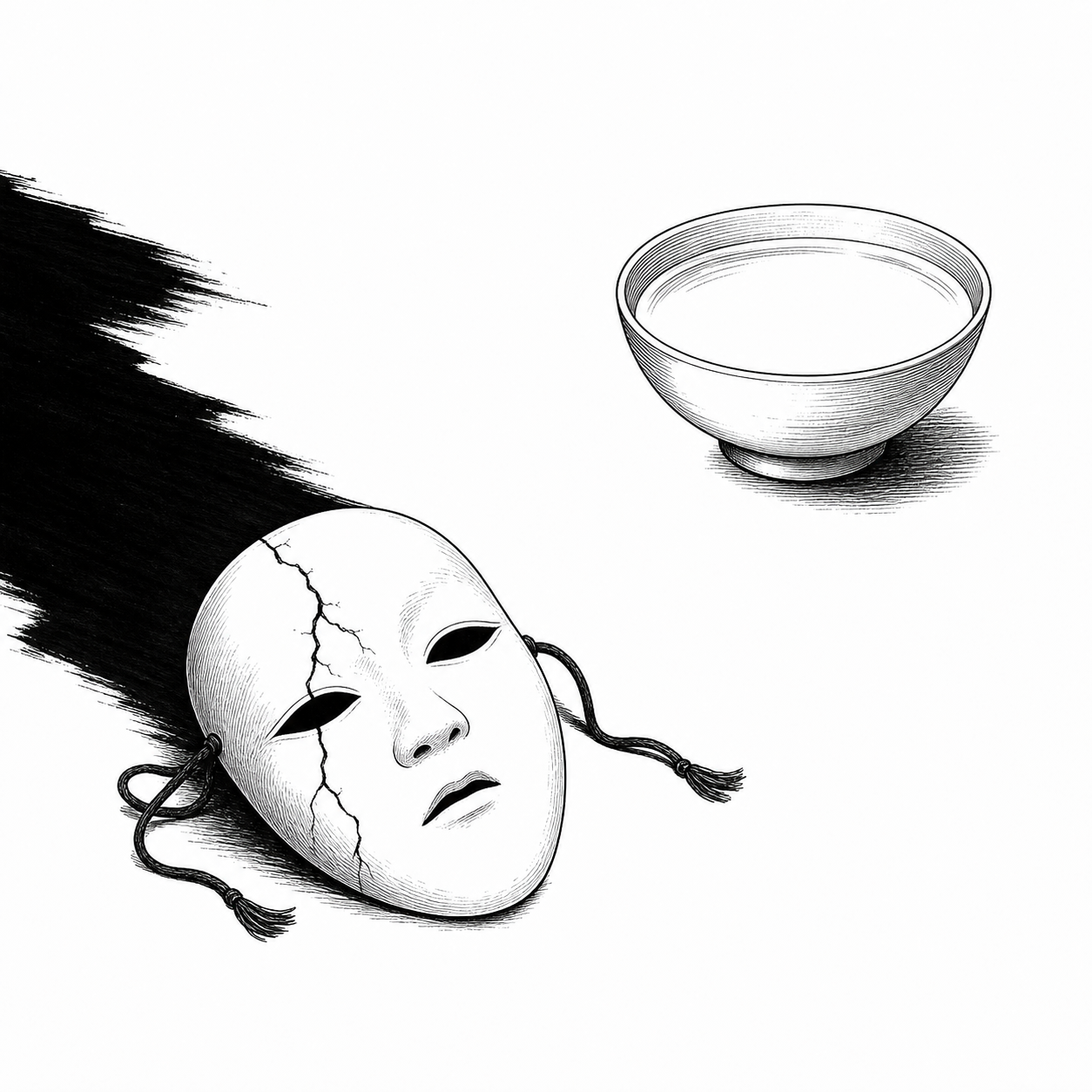
The fall is not a label the GM attaches. It is a direction the player and the scenes raise up together.
#Opening Fragment — The Bridge Not Crossed
The bridge back to the village still stood. The flames had not reached it, and the river was shallow.
"Cross now, and you can end it," the hero NPC said. "Lay down your weapon, and give back your name."
The majin PC looked across the bridge. There were the old companions, and the shrine he had once sworn to protect. On this side of the bridge stood his followers, and the name he had newly won.
The player was silent for a long while.
The GM called for no check. "You can cross. But if you do, you lose part of what you gained on this side."
The player shook his head. "I will not cross."
The bridge did not burn. It did not collapse. He simply never looked back again.
#Three Principles for Handling the Fall
| Principle | Operation |
|---|---|
| Do Not Pronounce a Verdict | Rather than "you have fallen," ask "in which direction does this choice look?" |
| Build Up Evidence | Leave repeated words, an abandoned name, a frightened companion, a changed prop. |
| Allow a Pause | Give a pausing scene before driving them past the point of no return. |
The fall is not a tool for stripping a player of authority over their character. It is a device for seeing how far a character can go.
#How to Write the Path of the Fall
When making a majin PC or a major majin NPC, these four lines are enough.
Wound: What was lost?
Excuse: With what words did they cross the first taboo?
Repetition: How did that choice become easier?
Name: What does he now call himself?
Example:
Wound: The village he protected in the war was massacred the next month by another lord.
Excuse: "To end it quickly, a greater fear is needed."
Repetition: He began executing even surrendered foes as an example.
Name: General of the Shurado, the war that ends war.#The Structure of the Pausing Scene
The pausing scene is a choice, not a sermon.
A good pausing scene has three elements.
| Element | Example |
|---|---|
| The Old Name | Family, master, lord, comrade, shrine, the first weapon. |
| The Present Gain | Power, followers, victory, vengeance, gold, knowledge. |
| What Would Be Lost | A place to return to, someone who believes in him, the meaning of his own word. |
The pausing scene need not lead to salvation. If it is refused, that refusal becomes the evidence for the next stage.
#The Five Forms of Return
| Form | Description |
|---|---|
| Repentance | He admits his choices and stands before the victims and the world. |
| Atonement Mission | There is no full forgiveness, but he takes on one last thing to set right. |
| Sealing | Because his power is dangerous if kept, he binds himself or is watched over. |
| Exile | He survives, but cannot come back into the community. |
| Death | Used only when death becomes not an escape but a final responsibility. |
Return is not a reward scene. The one who has returned, too, must live carrying the traces.
#The Five Forms of Downfall
| Form | Description |
|---|---|
| The Throne | The villain wins and founds a power, but that throne becomes a prison. |
| Monstrification | He loses his human name and crosses over into an NPC threat. |
| Isolation | Everyone leaves, and only the power remains. |
| Repetition | He thought he had won, but the same violence repeats in the next generation. |
| The Mirror Defeat | The hero wins without using the villain's methods. |
Downfall need not be punishment. Sometimes the strongest downfall is a scene in which nothing is filled even after getting what was wanted.
#Questions to Ask the Player
Ask briefly, during or after the session.
- What did your character stop explaining today?
- Who came to fear your character more?
- What name has your character not yet abandoned?
- If the same choice comes again, will it be easier?
- If he could stop, what would he have to lose?
The question is not a check. It is material for building the next scene.
#GM Principles
Do not make return too easy. But do not make it impossible from the start either.
What matters in villain play is direction, not judgment. If he is descending, show which step it is; if he turns back, show what he sets down to turn back.
The road back does not vanish — only the names that cannot be carried pile up along the way.