#Dojo · Sword-Drama Campaign
Contents
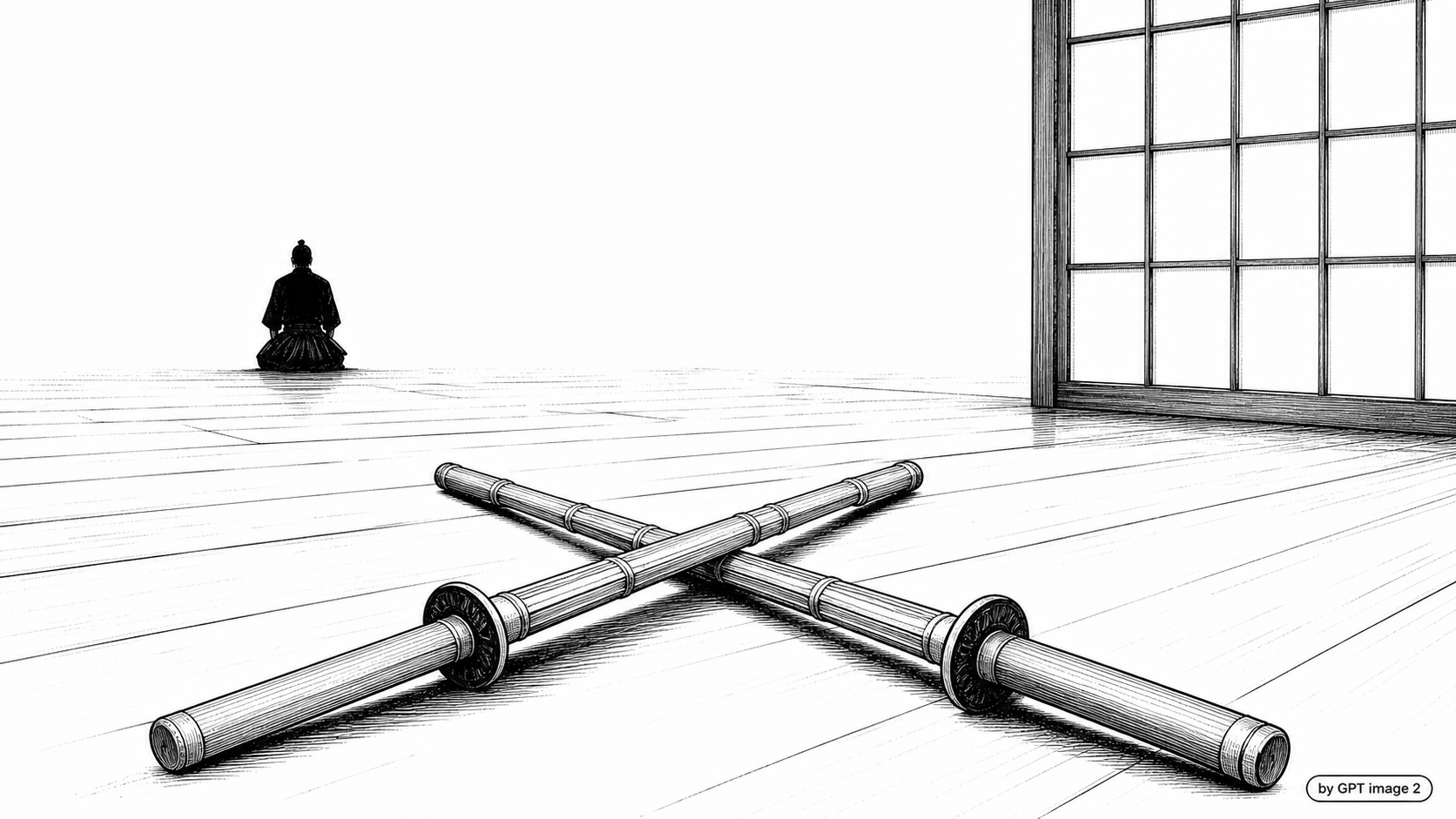
Campaign Module. A framework for running Edo sword drama as a long campaign.
#Scent — Sword-Scars in the Floorboards
The dojo floor is polished every day. Even so, certain sword-scars will not erase. A master's death, a fraudulent license, a vanished blade, the grudge of a disciple never once acknowledged — these remain in the wood grain and turn sword drama into a yoma tale.
#Law — Dojo Campaign
- Place the school's honor, disciple squads, famous blade, patron, and revenge license as recurring resources.
- Do not make swordsman antagonists strong in stats alone; define whose name they carry.
- Close the resolution with the choice of succession, sealing, disclosure, halting revenge, or disbanding the school — not mere victory or defeat.
#Scene Commentary — Swordsmanship Remembers
In a dojo campaign, the school is more than a combat style. Who learned from whom, which license was declared fraudulent, which defeat has never been acknowledged — these are the flesh of the school. Swordsmanship is bodily technique and simultaneously a lineage of memory.
Dojo scenes gain flavor from repeated ritual. Floor-polishing, the place where the practice sword is set down, the master's portrait, the bow before the sign — these small acts must accumulate before a duel carries weight. When the killing-demon swordmaster appears, he must not be a suddenly-maddened swordsman; he must be someone who emerged where that ritual and lineage broke.
Recurring material in a dojo campaign:
- The legitimacy of license and succession.
- The loyalty or fracture of the disciple squad.
- Whether to protect the famous blade or the school's name.
#Session Application — Repeat the Ritual
- First scene: Each session, repeat one small ritual — dojo cleaning, aligning the practice swords, bowing to the master.
- Complication: One day that ritual breaks. The practice sword is missing, the sign is damaged, the master's name has been erased.
- Final question: Do the PCs protect the school, or sever the grudge the school created?
#Recommended Antagonists
- Disciples of a swordmaster's dojo.
- Full-license assistant instructor.
- Yakuza kept ronin.
- Swordmaster who has become a killing-demon.
#Dojo Campaign Structure
A dojo campaign begins centered on a single school. The master dies, the famous blade vanishes, the disciples split in two, and an outside dojo issues a challenge. At first it looks like a human matter of honor; as incidents deepen, grudges, the famous blade, conspiratorial factions, and the killing-demon swordmaster are revealed.
#Recurring Incidents
| Incident | Use |
|---|---|
| Dojo challenge | First combat and rival introduction |
| License succession dispute | Conflict between disciple squad and assistant instructor |
| Revenge license | Clash between public order and private grudge |
| Match before the lord | A duel witnessed by the shogunate or domain |
| Famous blade disappearance | Pursuit incident linking to fc05 |
| Killing-demon appearance | Final conflict where swordsmanship turns into yoma obsession |
#Where Sword Drama Meets Yoma Tale
The moment sword drama becomes a yoma tale is "when the blade remembers too long." A master's grudge, a defeated disciple's jealousy, the name of a slain opponent, the famous blade's curse, the audience's fear — all attach to the swordsmanship. The killing-demon swordmaster is not a yoma who picked up a sword; he is the result of a human swordsmanship that summoned a yoma.
#Ending the Campaign
The end of a dojo campaign is not only defeating the strongest enemy. Whether to continue the school, seal the famous blade, halt the revenge, or record the killing-demon's name — that is the resolution.
"Sword-scars remain in the wood; grudges remain in the name."