#Chapter 8 — Arms and Equipment
Contents
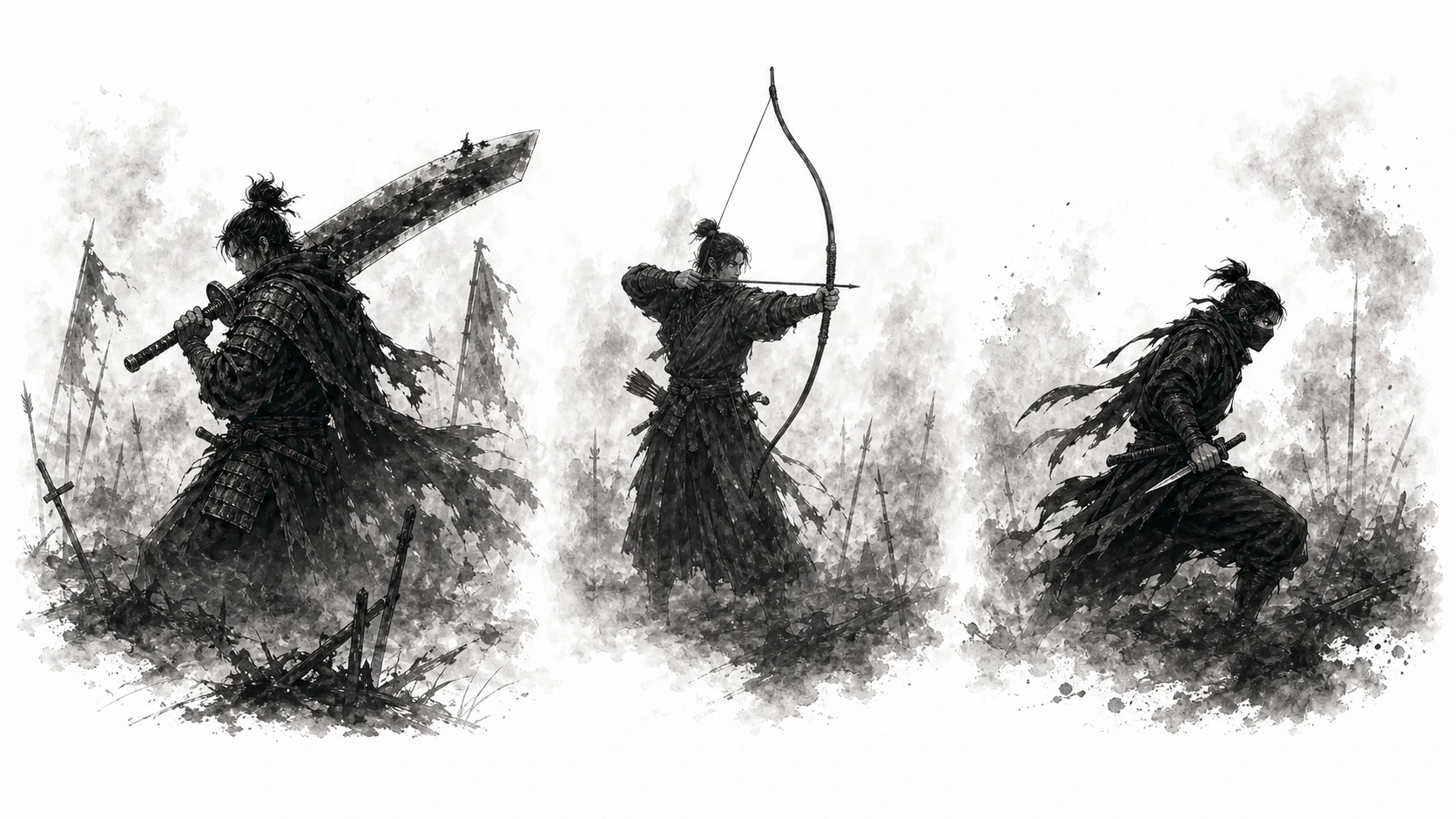
The weapon decides the way of fighting. Even the same "katana" fights a completely different battle depending on its form. What your character grips is, in effect, the choice of "which zone, which tactic will I shine in." This chapter narrows things down only as far as that choice needs — eight standard weapons, four sets of armor to guard the body, belongings for the road, and the existence of blades that bear a name. Do not try to cover every situation with a single weapon. It is enough for each character to have one or two shining zones.
#Weapon Grades — Number of Techniques
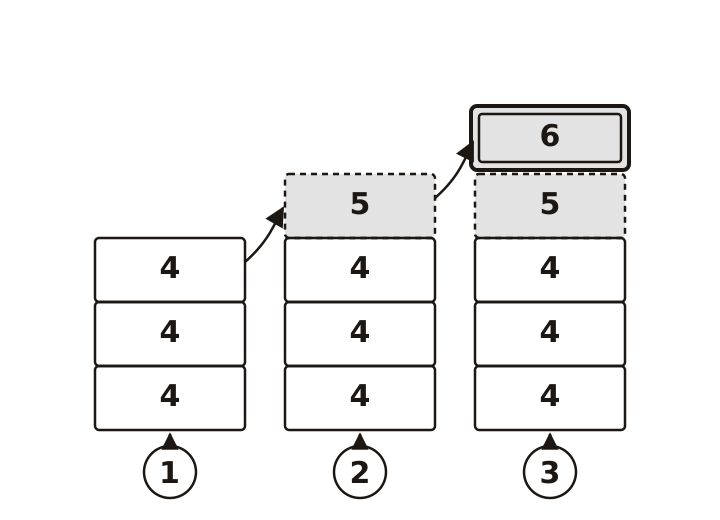
| Number | Meaning |
|---|---|
| 1 | Issue Gear — 3 techniques |
| 2 | Fine make — 4 techniques |
| 3 | Masterwork — 5 techniques |
| 4 | Base techniques (Attack A · Attack B · Defense) |
| 5 | Licensed technique (opened at Fine Work or higher) |
| 6 | masterwork technique (Masterwork only) |
Weapons split into three grades. The higher the grade, the more techniques it can use, one at a time.
| Grade | Description | Techniques |
|---|---|---|
| Issue Gear (普及品) | Mass-produced. Ashigaru standard. Buyable at market. | Attack A + Attack B + Defense = 3 |
| Fine Work (業物) | A quality weapon shaped by a craftsman's hand. Commission or loot. | 3 + Licensed technique = 4 |
| Masterwork (名品) | A weapon with a name. Its own narrative. Scenario reward or heirloom. | 4 + masterwork technique = 5 |
Your first character usually holds Issue Gear. A technique marked [Licensed] can be used only when that weapon is Fine Work or higher.
Source: co-07-01 §Weapon Grades
#The 8 Standard Weapons
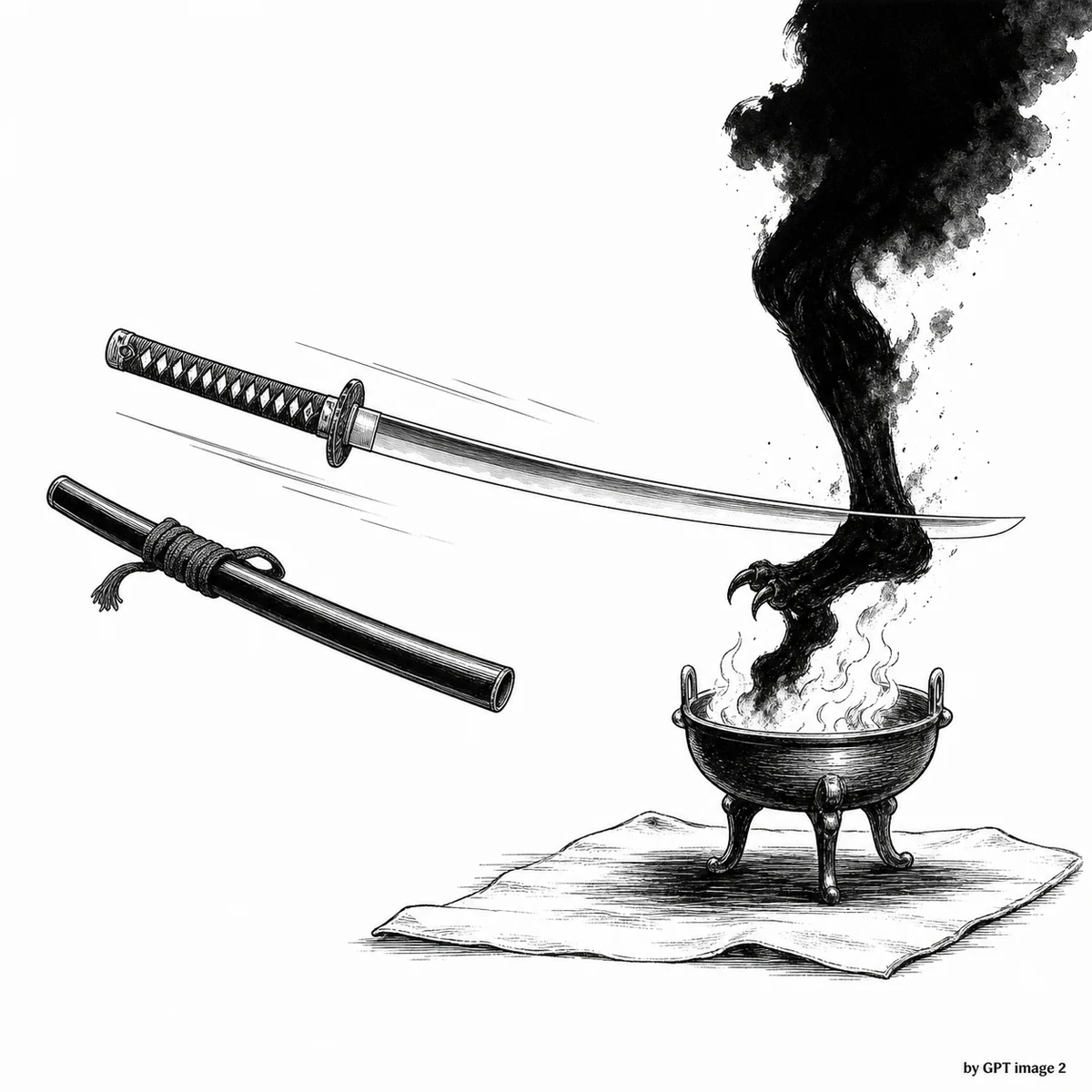
Below are the standard weapons representing eight families. Each weapon has three techniques by default — Attack A, Attack B, Defense — and its [Licensed] technique opens only at Fine Work or higher. The check formula is always the single form 2d10 + modifier >= Defense, and defense-bypass tags ([Pierce], [Direct], [Incorporeal]) are spelled out in the effect column. "Energy" is the Energy cost of using that technique, and "Wounds" is the reduction in Wounds dealt to the enemy on a hit.
A reserved defense technique's "+1 Defense while reserved" is a non-armor bonus from a weapon-technique stance, so it is negated by
[Direct](armor/shield bonuses remain).
#1. Uchigatana (打刀) — standard blade
The most common katana. Versatile, but never outstanding. The wielder's skill decides the blade's worth. Its strength is that the Parry reservation Energy is 1, the cheapest of all.
| Technique | Type | Energy | Check | Effect | Limit |
|---|---|---|---|---|---|
| Horizontal Cut (橫斬り) | Attack A (Courage) | 2 | 2d10+Courage+Swordsmanship >= Defense | 1 Wound. Standard attack. | — |
| Thrust (突き) | Attack B (Finesse) | 2 | 2d10+Finesse+Swordsmanship >= Defense | [Pierce 2]. 1 Wound. | — |
| Parry (受け流し) | Defense | reservation 1/improvised 2 | 2d10+Finesse+Swordsmanship >= enemy attack | Negate the hit. | — |
| [Licensed] Single Flash (一閃) | Attack | 3 | 2d10+Courage+Swordsmanship >= Defense | 1 Wound. The next time hit (including if defense or evasion negates the damage), automatically counterattack+2d10+Courage+Swordsmanship. Attack and defense as one. | 1 time/round |
No zone bonus (identical everywhere). Price: 5 gold.
#2. Zanbato (斬馬刀) — horse-cutter, large blade
A large blade for cutting down mounted warriors, horse and all. Too heavy to strike in a flurry, but it deals maximum damage on a Critical Hit.
| Technique | Type | Energy | Check | Effect | Limit |
|---|---|---|---|---|---|
| Horse-Cut (斬馬) | Attack A (Courage) | 3 | 2d10+Courage+Swordsmanship >= Defense | 1 Wound + additional 1 Wound against a mounted target. | — |
| Rising Cut (切上げ) | Attack B (Physique) | 3 | 2d10+Physique+Swordsmanship >= Defense | 1 Wound + enemy Defenseless (next breath). | 1 time/breath |
| Blade-Body Block (刀身受け) | Defense | reservation 2/improvised 3 | 2d10+Physique >= enemy attack | Negate the hit. On a defense Critical Hit, seal the enemy weapon for 1 round. | — |
| [Licensed] Cut in Two (一刀兩斷) | Attack | 4 | 2d10+Courage+Swordsmanship+1 >= Defense | 2 Wounds. 3 Wounds on a Critical Hit. | 1 time/round |
Zone bonus: Front Zone +1. Energy +1 in the Core Zone (treated as a long weapon). Price: 7 gold.
#3. Su-yari (素槍) — straight spear
A plain straight-line spear. The ashigaru's basic weapon. It establishes Domination in the Front Zone and checks the enemy with reach.
| Technique | Type | Energy | Check | Effect | Limit |
|---|---|---|---|---|---|
| Straight Thrust (直突き) | Attack A (Courage) | 2 | 2d10+Courage+Spearmanship >= Defense | 1 Wound. Range: same zone+adjacent Front Zone. | — |
| Sweep (薙ぎ) | Attack B (Physique) | 2 | 2d10+Physique+Spearmanship >= Defense | No damage. Force move the target (adjacent zone). | 1 time/breath |
| Check (牽制) | Defense | reservation 2/improvised 3 | automatic on enemy movement | Against an enemy entering the zone, 2d10+Courage+Spearmanship >= Defense. On hit, movement stops+1 Wound. | — |
| [Licensed] Spear Wall (槍壁) | Stance | 2 | — | While maintained, your zone Domination +3. +4 in the Front Zone. Cannot move. | maintain |
Zone bonus: Straight Thrust +1 in the Front Zone. Energy +1 in the Core Zone. Price: 2 gold.
#4. Naginata (薙刀) — long blade spear
A blade mounted on a long haft. It cuts like a katana yet has the reach of a yari. Strong at wide-area cuts against many enemies.
| Technique | Type | Energy | Check | Effect | Limit |
|---|---|---|---|---|---|
| Horizontal Sweep (橫掃) | Attack A (Courage) | 3 | 2d10+Courage+Spearmanship >= Defense | Check 2 enemies in the same zone. Each success deals 1 Wound. Wide (split across 2 bodies). | — |
| High Cut (上段斬り) | Attack B (Finesse) | 2 | 2d10+Finesse+Spearmanship >= Defense | 1 Wound. Range: same+adjacent. | — |
| Naginata Block (薙刀受け) | Defense | reservation 1/improvised 2 | 2d10+Finesse+Spearmanship >= enemy attack | Negate the hit. Can also defend against attacks from outside reach (adjacent zone). | — |
| [Licensed] Chain Sweep (連環掃) | Attack | 4 | 2d10+Courage+Spearmanship >= Defense | Check all enemies in the same zone. Each takes 1 Wound. | 1 time/round |
Zone bonus: Front Zone +1. Energy +1 in the Core Zone (long weapon). Price: 5 gold.
#5. Daikyu (大弓) — longbow
A bow for long-range sniping. It fires safely from the Rear Zone. A bow reloads automatically at no cost with every shot, so reloading does not occupy the defense slot or movement — this is the core axis of contrast with the teppo.
| Technique | Type | Energy | Check | Effect | Limit |
|---|---|---|---|---|---|
| Direct Shot (直射) | Attack A (Courage) | 2 | 2d10+Courage+Archery >= Defense | 1 Wound. Range: 2 zones. | — |
| Arcing Shot (曲射) | Attack B (Wisdom) | 3 | 2d10+Wisdom+Archery >= Defense | 1 Wound. Ignore cover. Range: 3 zones. | 1 time/breath |
| Bow-Stave Block (弓幹受け) | Defense | reservation 2/improvised 3 | 2d10+Physique >= enemy attack | Defense +1 while reserved. On a successful defense, damage -1 Wound (minimum 1). On a defense Critical Hit, negate the hit. Emergency melee defense. | — |
| [Licensed] Piercing Shot (貫通射) | Attack | 3 | 2d10+Courage+Archery+1 >= Defense | [Pierce 2]. 2 Wounds. 1 Wound to the enemy behind as well. | 1 time/round |
Price: 5 gold. Long-range sniping and Rear Zone specialist.
#6. Tanegashima (種子島) — standard matchlock
A matchlock brought over from the Nanban. The only standard weapon that breaks heavy armor. That reloading occupies the defense slot is the price of its powerful armor bypass.
| Technique | Type | Energy | Check | Effect | Limit |
|---|---|---|---|---|---|
| Direct Fire (直射) | Attack A (—) | 2 | 2d10+Archery >= Defense | [Pierce all]. 1 Wound. Range: adjacent zone. | — |
| Arcing Fire (曲射) | Attack B (Wisdom) | 3 | 2d10+Wisdom+Archery >= Defense | 1 Wound. Ignore cover. Range: 2 zones. | 1 time/breath |
| Reload (再裝填) | Defense | 2 | — | Enables next shot. Required after firing. Cannot move while reloading. | — |
| [Licensed] Three-Rank Fire (三段射擊) | Attack | 4 | 2d10+Archery >= Defense | [Pierce all]. 2 Wounds. 3 consecutive shots (preloaded). Must prepare before battle starts. | 1 time/battle |
Price: 8 gold.
Teppo Check Protocol. A teppo's individual single-target shot rolls
2d10 + Archery >= Defense— the attribute is not added. Because[Pierce all]nullifies armor and shields, it pierces even heavy armor (Defense 16 → effective 10), but non-armor Defense such as evasion, stances, barriers, and cover is reflected in the to-hit as is (that domain is[Direct], so a teppo cannot pierce it). Critical Hit = 2 Wounds + 1 Wound to the enemy behind.
#7. Tanto (短刀) — standard dagger
A versatile support dagger. It does not tire in a Core Zone melee. Being a short weapon, its Combo Fatigue penalty in the Core Zone is eased to -1 instead of -2.
| Technique | Type | Energy | Check | Effect | Limit |
|---|---|---|---|---|---|
| Thrust (突き) | Attack A (Courage) | 1 | 2d10+Courage+Swordsmanship >= Defense | [Light]. 1 Wound. | — |
| Inside the Guard (懷入り) | Attack B (Finesse) | 1 | 2d10+Finesse+Swordsmanship >= Defense | [Light]. 1 Wound. [Pierce 3] in the Core Zone, [Pierce 1] outside the Core Zone. | — |
| Emergency Evasion (緊急回避) | Defense | reservation 1/improvised 2 | 2d10+Finesse >= enemy attack | Negate the hit. Even on failure, damage -1 Wound (minimum 1). Treat the opponent's Critical Hit as an ordinary success. | — |
| [Licensed] Pierce the Vital Point (急所貫き) | Attack | 2 | 2d10+Finesse+Ninjutsu >= Defense | [Pierce 2]. 2 Wounds. Bleeding on a Critical Hit. | 1 time/round |
Price: 1 gold. Combo Fatigue -1 applies in the Core Zone.
#8. Fists (素手) — unarmed combat
Bare-handed grappling. The last resort that remains even when you lose your weapon, even when weapons are forbidden. Especially strong in the Core Zone.
| Technique | Type | Energy | Check | Effect | Limit |
|---|---|---|---|---|---|
| Strike (打擊) | Attack A (Courage) | 1 | 2d10+Courage+Unarmed Combat >= Defense | [Light]. 1 Wound. (Wildlander = treated as ordinary) | — |
| Grapple (組み) | Attack B (Physique) | 2 | 2d10+Physique+Unarmed Combat vs enemy 2d10+Physique | No damage. Bind (cannot move for 1 round). | 1 time/breath |
| Push Out (押し出し) | Defense | reservation 2/improvised 3 | 2d10+Physique+Unarmed Combat vs enemy 2d10+Physique | Force-move the enemy (adjacent zone). No damage. | — |
| [Licensed] Chain Technique (連鎖技) | Attack | 2 | 2d10+Courage+Unarmed Combat >= Defense | 1 Wound+bind. Strike and grapple at once. | 1 time/round |
Price: none (bare-handed). Core Zone +2 bonus.
Source: co-07-01 §Blades, Spears, Bows, Guns, Short Weapons (standard-weapon excerpt)
#When You Lose Your Weapon — Makeshift Weapons
When you have lost your blade or it is your only option, everything within reach of your hand becomes a weapon. Makeshift weapons like a bamboo spear, a sickle, a stone, a kitchen knife, or a rusted blade cannot become a masterwork/Fine Work/Divine Artifact, have no Licensed technique, and have only one main attack and one defense technique. Because they are unforged and unfamiliar to the hand, -1 to hit on every individual attack check always applies. For example, a bamboo spear is 2d10 + Courage >= Defense (with the constant -1 to hit on top) for a single thrust dealing 1 Wound, and a haft block — that is all. Price is 0 to 1 gold; it can be picked up anywhere.
Source: co-07-15 §Common Specifications (-1 to hit, 2 techniques, no Licensed)
#Armor (甲冑)
Armor raises Defense, but heavy armor makes breathing hard and movement dull. The armor's Energy penalty is offset by as much as the Physique (體) modifier.
| Armor | Defense | Energy Penalty | Notes |
|---|---|---|---|
| Unarmored | 10 | — | base |
| Light armor (leather, mail) | 12 | — | ashigaru standard |
| Heavy armor (tosei gusoku) | 14 | -1 Energy | can be offset by Physique (體) |
| Heavy battle armor (o-yoroi) | 16 | -2 Energy | Physique +2 or higher recommended |
| Shield | +1 | — | one-handed weapons only |
The table value is the target number for Defense directly. An attack to-hit check is 2d10 + attack modifier >= target Defense.
How to offset with Physique (體). Wearing heavy armor (-1 Energy) with Physique +1 makes the penalty 0. Wearing heavy battle armor (-2 Energy) with Physique +1 leaves an effective -1 Energy. That is why heavy battle armor is recommended at Physique +2 or higher. A shield gives Defense +1 but can only be used together with a one-handed weapon.
Armor Damage and Repair. When hit by an attack with the [Break] tag, that attack's armor reduction remains until repaired. During battle you can temporarily restore only +1 of the armor's extra portion with an upkeep slot (1 time per same set of armor); after battle, a 1-hour camp repair gives +2 (1 gold), and a 1-day blacksmith repair gives full restoration (30% of the armor's price).
Source: co-03-05 §Defense, §[Break] Repair and Recovery
#Quick Table of General Belongings
Beyond weapons and armor, these are the things on the road. The GM handles the fine-grained economy, so what follows is a reference narrowed only as far as outfitting a character needs.
| Item | Value / Notes |
|---|---|
| Currency unit | Gold (金貨). The weapon and armor prices below are the baseline. |
| Weapon price range | Makeshift weapons 0 to 1 · thrown types such as teyari and kunai 0.5 to 1 · standard melee 2 to 7 · bows 3 to 5 · teppo 8 to 20. |
| Armor repair cost | Camp repair 1 gold · blacksmith repair = 30% of the armor's price · masterwork/Divine Artifact repair = 50% + a craftsman of equal grade. |
| Thrown-weapon consumption | Teyari, kunai, stones, and the like are lost when thrown (consumed). Buy them in sets (e.g., a set of 5 kunai for 0.5 gold). |
| Reload materiel | Teppo and bows are handled by rule with no separate belonging management (bow = automatic at no cost, teppo = consumes the defense slot). |
| Emergency armor parts | With camp-repair tools and spare parts (1 gold), restore +2 of the armor's extra portion. |
Precise prices, commerce, and domain economy are outside the scope of this handbook. If they are needed to run a campaign, consult the GM materials.
Source: co-07-01 (prices) · co-03-05 §Repair and Recovery (repair costs) · co-07-15 (makeshift-weapon prices)
#Masterworks and Divine Artifacts — Blades That Bear a Name
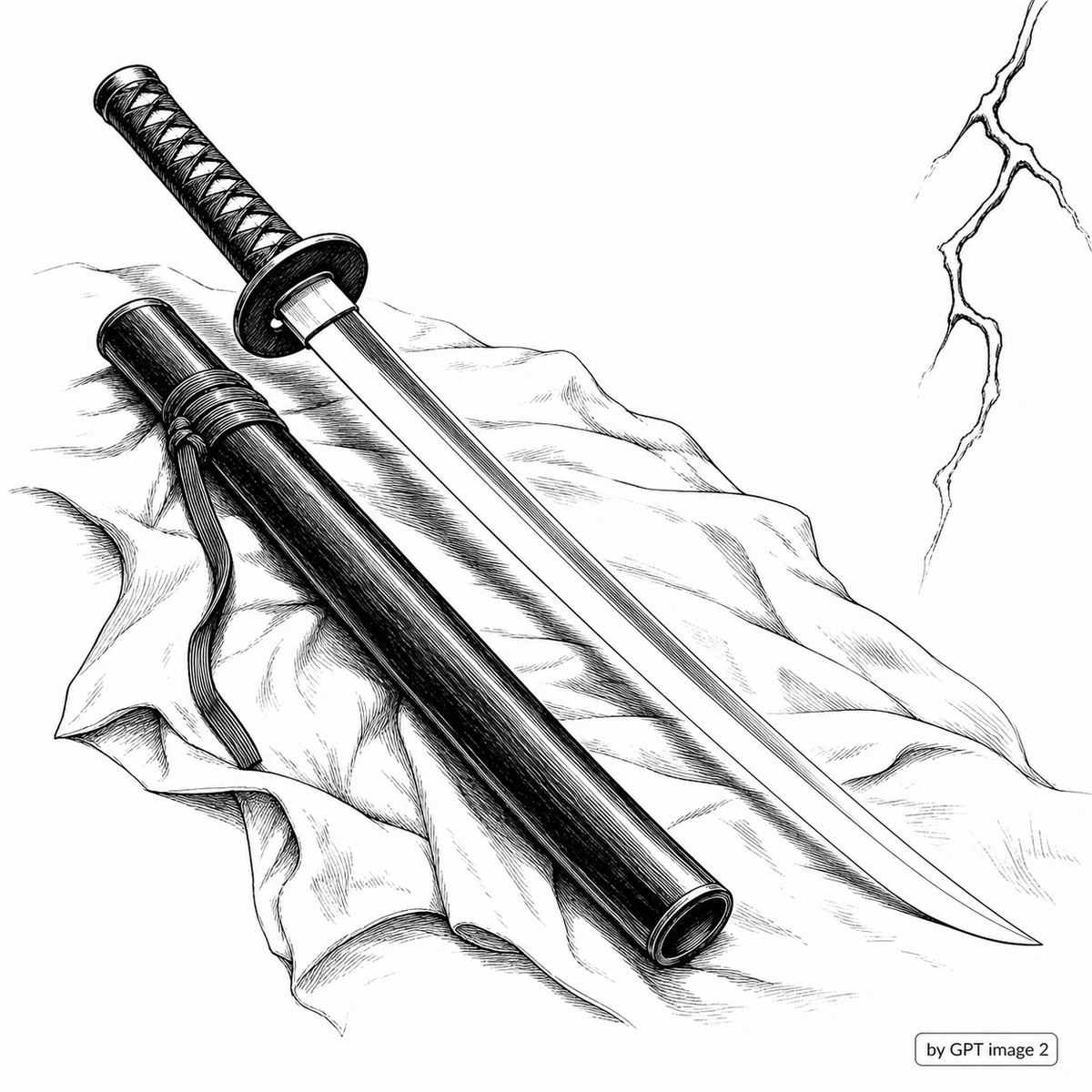
Above the standard weapons are weapons that bear a name. A masterwork (名品) is a weapon carrying its own narrative, and in addition to the four standard techniques it also holds one masterwork technique unique to that weapon — a craft dwelling only in that one blade, of the sort where a single Muramasa blade cleaves a fiend's cuirass in two. Above it, a Divine Artifact (神器) is arms with a divine essence in them, standing at the very top of armor's grade hierarchy and able to split even masterwork armor with [Break]. Such weapons cannot be bought at market — they are a scenario reward, an heirloom passed down a bloodline, or a relic sleeping deep in a yoma's nest. This handbook conveys only the fact that they exist. The data for individual masterworks and Divine Artifacts is handled by the GM in the core rulebook — on the day your campaign touches such a weapon, the GM will hand you a sheet.
Source: co-07-01 §Weapon Grades (masterwork = 5 techniques) · co-03-05 §[Break] Grade Hierarchy (Divine Artifact armor)
#Summary
- Weapon grades: Issue Gear 3 techniques · Fine Work 4 techniques (+Licensed) · masterwork 5 techniques (+masterwork technique).
- The check is always
2d10 + modifier >= Defense. Defense bypass is marked with the[Pierce](ignore armor),[Direct](ignore evasion and sorcery), and[Incorporeal](soul) tags. - Teppo: individual shot
2d10+Archery >= Defense(attribute not added) +[Pierce all]. It pierces even heavy armor, but reloading eats the defense slot. - Armor: Unarmored 10 · Light armor 12 · Heavy armor 14 (-1 Energy) · Heavy battle armor 16 (-2 Energy) · Shield +1. The Energy penalty is offset by Physique.
- Makeshift weapons: 2 techniques, no Licensed, a constant -1 to hit.
- Masterworks and Divine Artifacts are introduced only as existing — the data comes from the GM (the core rulebook).