#Usage — How to Hold and What You Carry
Contents
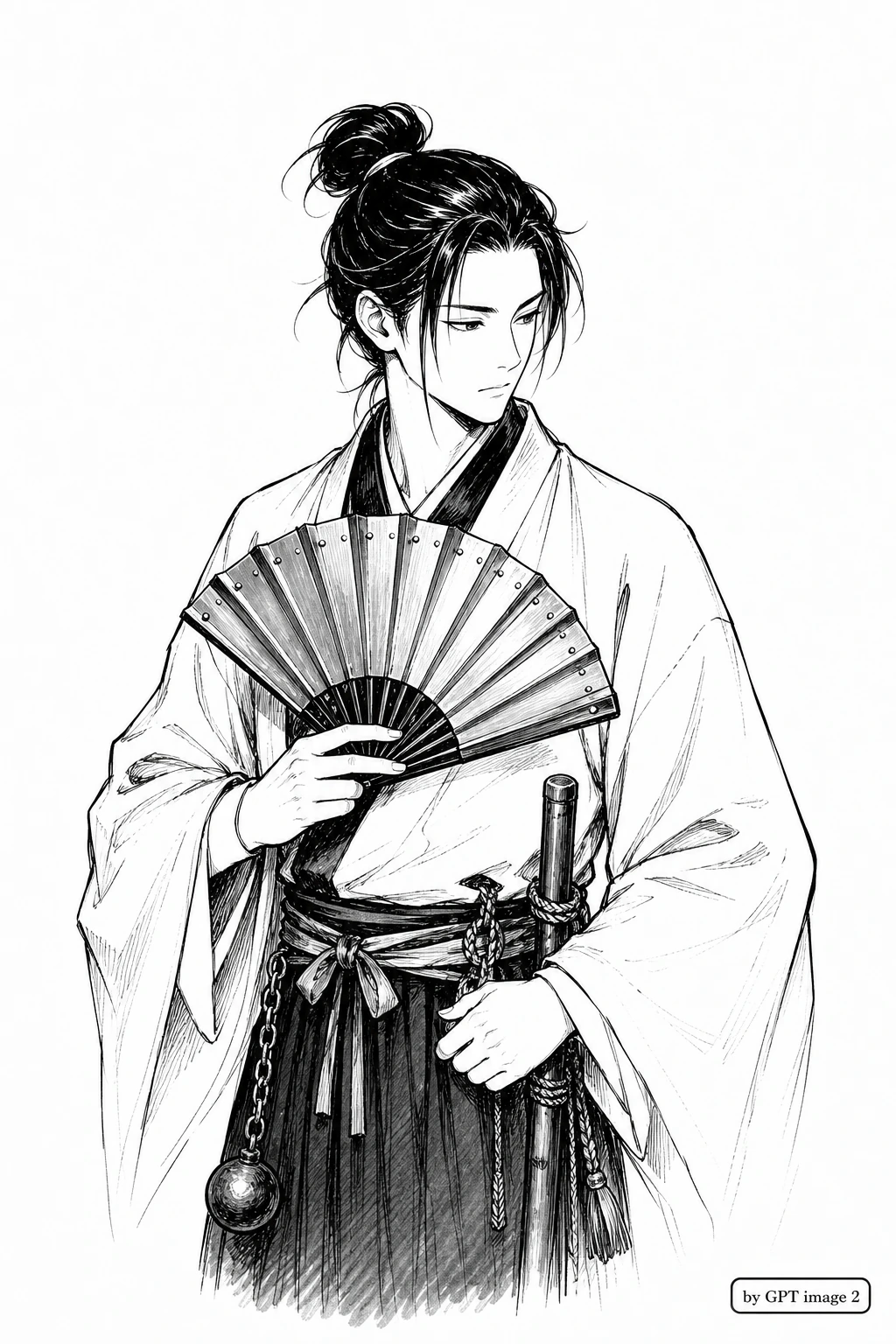
This document belongs to the front. The weapon data is in
01and02. Here we cover how to hold them and the danger they carry.
#Table — Weapon → Skill at a Glance
| Weapon | Skill Used | Forte |
|---|---|---|
| kusarigama | Ninjutsu (or Swordsmanship) | binding + cutting, range control |
| manrikigusari | Ninjutsu/Unarmed Combat | nonlethal subdual, concealment |
| tessen | Unarmed Combat | self-defense and defense in weapons-forbidden zones |
| shikomizue | Swordsmanship | concealed quick-draw Surprise Attack |
| fukiya | Ninjutsu (+Poisoncraft, Herbalism) | silent poison delivery |
| fukumibari | Ninjutsu | sight disruption, stealing a beat |
| makibishi | Ninjutsu | relocation hindrance, escape |
| kakute/nekote | Unarmed Combat | Infiltration Surprise Attack |
| shuko | Unarmed Combat (+Lightness Skill, Infiltration) | climbing, defense, hook |
| horokudama | Ninjutsu (or Archery) | area confusion, smoke, ignition |
Most are of the Ninjutsu and Unarmed Combat family. So the owners of these weapons are shinobi, ronin, wildlanders, and spies — not orthodox warrior houses.
#Note — Concealment and Detection
Half of hidden arms is not being caught.
- Hiding: the shikomizue, tessen, kakute, and fukumibari do not look like weapons under ordinary inspection. At a body search or a checkpoint inspection, conceal them with Infiltration/Disguise.
- Detection: if the opponent suspects, run a Perception contest —
2d10 + (Finesse or Wisdom) + Perceptionvs the concealer's2d10 + Finesse + (Infiltration or Disguise). If the detecting side wins, the true nature is revealed. - Weapons-forbidden zones: in settings where blades must be surrendered, such as a tea gathering, an audience hall, or a checkpoint, the tessen, shikomizue, and fukumibari are among the few arms that pass openly. The one move made in such a setting is the true worth of a hidden arm.
#Note — Social Danger: The Coward's Weapon
Warrior-house society despised hidden arms as the "coward's weapon (卑怯者の得物)." In a world that holds a fair one-on-one to be honor, the hidden blade, the scattered spike, and the held needle were a disgrace.
- If a PC openly uses a hidden arm in a warrior-house or public setting, the GM may impose a dramatic penalty to Bearing and Negotiation (
[GM discretion], not a forced numeric penalty). - Conversely, for a shinobi, ronin, entertainer, or wildlander it is legitimate self-defense with no stigma at all. The same weapon becomes honor or disgrace depending on who holds it — that is the story of outlander arms.
#Note — The GM Builds the Masterwork and Divine Artifact
This issue carries only the base grade. The masterwork and Divine Artifact (神器) versions of these weapons are crafted by the GM directly.
- Masterwork (名品): in the
co-07-02 masterworkformat. E.g. — Blood-Calling Kusarigama (absorbs 1 Wound on binding), Thousand-Needle Fukiya (+2 to the target number for poison resistance). - Divine Artifact (神器) and Wandering Relic: in the
co-07-03 Divine Artifactformat. A single blade such as a shikomizue fed with a spirit (靈), or a kusarigama that binds a vengeful spirit, carries both a history and a Curse. - Crafting principle: begin by adding only 1 technique or 1 tag on top of the base grade. Outlander arms shine through their tale rather than their strength.
Tie-in: used together with the masterwork and swordsmith procedures of Meito-ki
fc05, a single famed outlander blade stands up an entire tale.
#Scent — One Sentence
"Can a weapon hold guilt? — The guilt is always in the hand that holds it, and in the place where that hand stands."